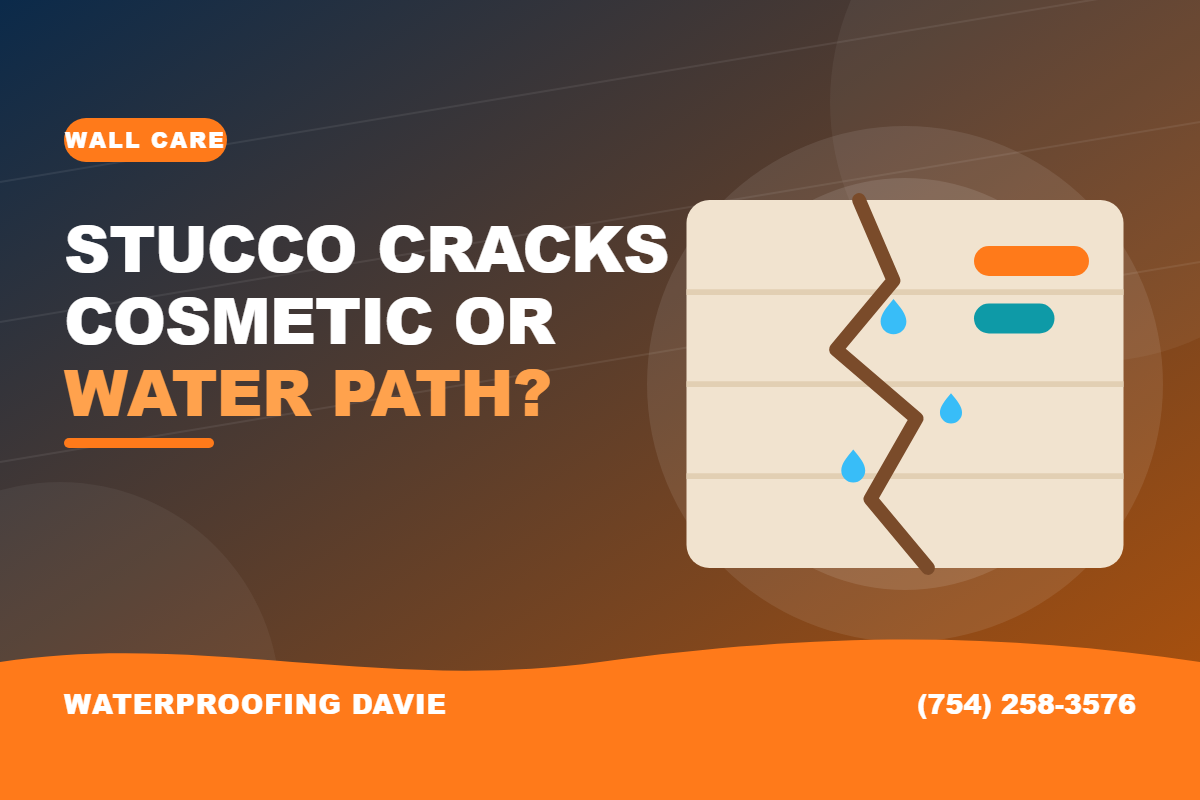
Stucco Cracks in Florida: Cosmetic, or a Path for Water?
Walk around almost any South Florida home and you will find stucco cracks. Some are thin lines that have been there for years and cause no harm. Others open in rainy season, stain the paint below and let moisture into the wall. Knowing which is which saves money and prevents the quiet damage that comes with ignoring a path for water.
This guide explains why stucco cracks, how to judge their seriousness, how repairs are done and how waterproof coatings fit in. It is a homeowner’s guide, not an engineering evaluation; large, widening or structural-looking cracks should be assessed by a qualified professional.
Quick Answer
Hairline cracks are common and often cosmetic, but any crack that can take in water should be sealed. Wider, growing, stair-step or horizontal cracks may signal movement or structural issues and deserve a professional evaluation. Repair usually means cleaning, filling with a flexible material, texturing to match and recoating with a breathable waterproof or elastomeric coating.
In This Guide
- Why Stucco Cracks in Florida Homes
- Types of Stucco Cracks and What They Mean
- Does Water Really Get in Through Hairline Cracks?
- How to Inspect Your Walls
- How Stucco Cracks Are Repaired
- Why Painting Alone Does Not Fix Cracks
- Cracks Around Windows and Doors
- Efflorescence, Stains and Hollow Spots
- When to Call a Professional
- Stucco Types and What They Mean for Cracking
- Paint Colors, Heat and Chalking
- Annual Wall Inspection Routine
- Frequently Asked Questions
Why Stucco Cracks in Florida Homes
- Shrinkage: stucco shrinks as it cures, which leaves fine cracks.
- Thermal movement: heat and cooling expand and contract the wall.
- Settlement: soils shift and buildings move slightly.
- Openings: corners of windows and doors concentrate stress.
- Impact and vibration: from vehicles, construction or storms.
- Moisture: trapped water can cause expansion, delamination and cracking.
- Application issues: thin coats, poor curing and missing control joints.
To have a crack looked at, see our stucco repair in Davie, FL page for how we connect you with an independent contractor.
Types of Stucco Cracks and What They Mean
| Crack type | Appearance | Likely meaning | Action |
|---|---|---|---|
| Hairline (map) cracks | Fine web-like lines | Shrinkage in the finish coat | Seal and coat if water can enter |
| Vertical or random thin cracks | Narrow, straight or irregular | Normal movement or shrinkage | Monitor and seal |
| Diagonal cracks from corners | Run from window or door corners | Stress at openings | Seal and watch for growth |
| Stair-step cracks in block | Follow mortar joints | Possible settlement | Professional evaluation |
| Wide or widening cracks | Gaps you can fit a coin into | Movement or structural issue | Professional evaluation |
| Bulging or hollow-sounding areas | Sound dull when tapped | Delamination from moisture | Evaluate and repair |
Does Water Really Get in Through Hairline Cracks?
It can. During heavy, wind-driven rain, even narrow cracks draw water into the stucco by capillary action. Once inside, water can reach the block or the lath and sheathing behind, soak insulation and cause paint failure, staining, efflorescence and in some cases corrosion or rot. Water that remains in the wall also keeps interior humidity high.
How to Inspect Your Walls
- Walk the exterior after rain and look for dark or damp patches.
- Look for staining below cracks and at window corners.
- Check for peeling paint, bubbling or powdery white deposits.
- Tap suspect areas for hollow sounds.
- Measure and photograph cracks, then re-check after a few months to see if they grow.
- Look inside for stains on walls near the cracks.
How Stucco Cracks Are Repaired
- Clean the crack and remove loose material.
- Widen very fine cracks slightly if the repair material requires it.
- Fill with a flexible elastomeric patching compound or appropriate stucco patch.
- Texture the repair to match the surrounding finish.
- Prime if the product requires it.
- Apply a breathable elastomeric or waterproof coating to the wall, not only the cracks.
Our exterior wall waterproofing page describes the process, and the guide to elastomeric waterproof paint in Florida explains what these coatings can and cannot do.
Why Painting Alone Does Not Fix Cracks
Ordinary paint can bridge only the finest hairlines for a short time. When the wall moves again, the paint cracks along the same line. Flexible fillers and elastomeric coatings handle movement better, but the crack has to be properly prepared first.
Cracks Around Windows and Doors
These are the most common leak paths. Sealants and flashing at openings matter as much as the stucco. See why windows leak in Florida.
Efflorescence, Stains and Hollow Spots
- White powdery deposits indicate water carrying salts through the wall.
- Dark streaks below cracks show water paths.
- Hollow sounds point to delamination, which may require removal and patching.
When to Call a Professional
- Cracks wider than a few millimeters or that keep growing.
- Stair-step cracking in block or cracks through the foundation.
- Doors or windows that bind or no longer close well.
- Bulging, hollow or crumbling stucco.
- Interior moisture, mold or rot.
Stucco Types and What They Mean for Cracking
Traditional three-coat stucco over lath behaves differently from one-coat systems or stucco applied directly to block. Each has its own cracking patterns, so ask a contractor to identify what you have before choosing a repair. Control joints, where present, are meant to give the wall a place to crack harmlessly; they need to be sealed rather than filled with rigid patching material.
Paint Colors, Heat and Chalking
Dark colors absorb more heat and can increase thermal stress. Chalking, a powdery residue, indicates paint breakdown and is a sign the wall may be absorbing more water. Washing and recoating with a quality exterior system helps.
Annual Wall Inspection Routine
- Walk each side after a rain and look for darkened patches.
- Check corners of windows and doors.
- Inspect the base of the wall where soil or mulch touches stucco.
- Check irrigation overspray, which can wet walls repeatedly.
- Photograph and compare year to year.
For related repairs, see why windows leak in Florida.
For slab and foundation cracks, see foundation and slab cracks in Davie: when to worry. If you want help with wall repairs, the Waterproofing Davie referral service can connect you with an independent contractor. Call (754) 258-3576.
Frequently Asked Questions
Get a Written Estimate From a Local Contractor
Call or text (754) 258-3576 with your address and a photo of the problem. We connect you with an independent contractor who inspects the property and gives you a written estimate before any work starts.
Waterproofing Davie is a local referral service. Independent contractors perform the work and provide their own estimates, licenses, insurance and warranties, so ask each one for those details in writing. This article is general information and does not replace an on-site inspection.