
Home › Services › Flat Roof Coating
Flat Roof Coating in Davie, FL
Flat and low-slope roofs drain slowly, so small defects let water in fast. A professionally applied coating seals seams and surfaces into one continuous waterproof layer and protects the roof from Florida sun.
Local referral to independent contractors · Written estimate before work starts · Emergency leaks welcome

Flat Roofs at a Glance
48 hrs
standing water beyond this is commonly treated as ponding
~60 in.
of rain a Davie roof sheds in a typical year
Jun 1 – Nov 30
hurricane season, when drains and seams are tested
1 layer
a coating forms one seamless waterproof surface
Quick Answer: What Does Flat Roof Coating Do?
A flat roof coating is a liquid-applied waterproofing layer that cures into a seamless, flexible membrane over a clean, repaired roof surface. It seals small cracks and seams, protects the roof from ultraviolet light and often reflects heat. It works best on a roof that is structurally sound and dry beneath, and it is applied after leaks, flashing and drainage have been addressed. Call (754) 258-3576 or text photos for a written estimate from an independent local contractor.
Roofs are one part of a building’s water defense. For walls, windows, slabs and drainage as well, see our full range of waterproofing and roof coating services in Davie.
Signs a Flat Roof Needs Attention
Flat roofs give clear warnings. Check them on a dry day, and again after heavy rain.
Ponding water
Puddles that remain for a day or two after rain add weight, speed up wear and are a common source of leaks.
Blisters, cracks and alligatoring
Raised bubbles, hairline cracks and a scaly pattern show the surface is aging and losing flexibility.
Open seams and loose flashing
Lifting seams, peeling edges and gaps where the roof meets walls and curbs let water in first.
Chalky, worn or hot surface
Faded color, exposed fabric or a surface that feels very hot suggests the protective layer has thinned.
Why Flat Roofs Leak More Than Pitched Roofs
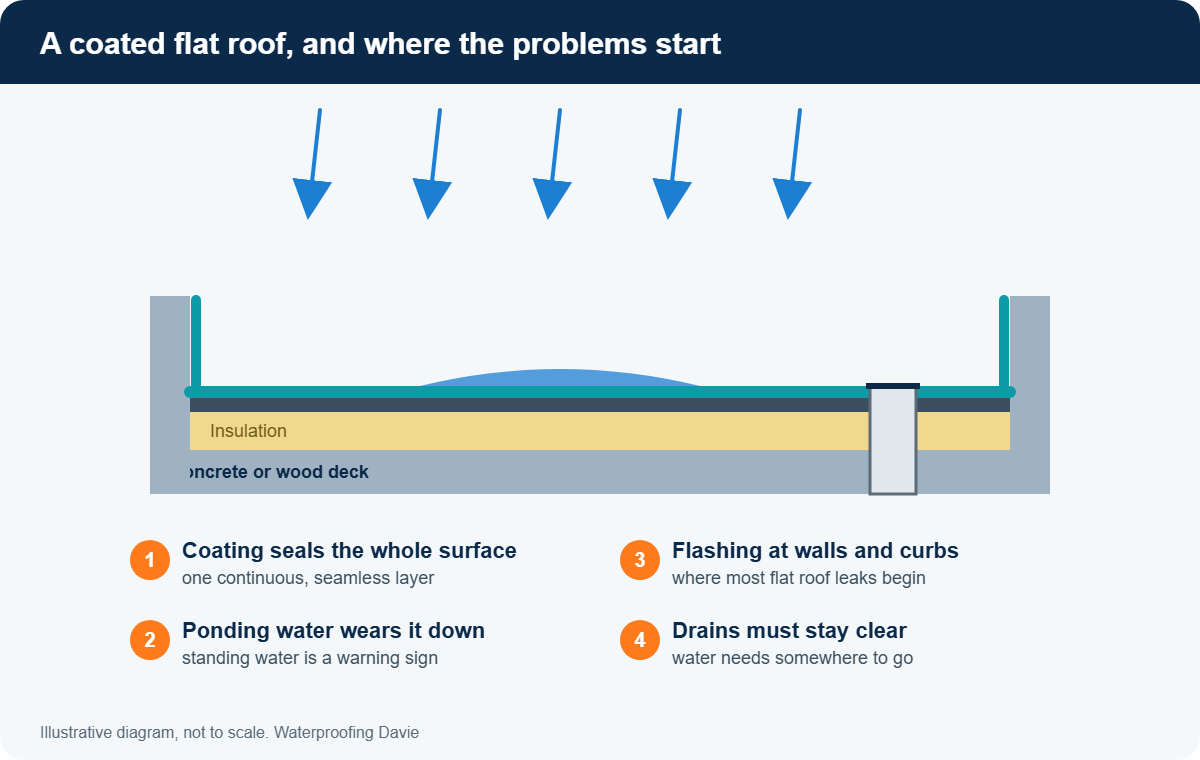
A pitched roof sheds water quickly. A flat roof has almost no slope, so water leaves slowly, if at all. That gives every seam, edge and penetration more time to leak, and it gives sun more time to bake the surface.
The most common weak points are seams between sheets, the junction with parapet walls, rooftop equipment curbs, drains and scuppers, and any place where someone has walked or worked. Over time the surface also shrinks, cracks and blisters as it heats and cools each day.
A coating does not change the slope of a roof, but it removes many of the openings water uses. It is paired with repair of flashing and drains so that water leaves the roof. If you are already seeing stains below the roof, our guide to roof leak repair in Davie shows how leaks are traced.
Flat Roof Coating by Roof System
The right preparation and product depend on what the roof is made of. Choose the one closest to yours.
These layered asphalt-based roofs are common on older flat roofs and many commercial buildings.
- Clean and repair blisters, splits and seams before coating
- Prime where the product requires it
- Coat with an acrylic, silicone or polyurethane system suited to the surface
Coating can extend the service life of a sound bitumen roof when applied properly.
Single-ply membranes can sometimes be coated, but each type needs specific cleaners and primers.
- Confirm the membrane type and condition before choosing a product
- Check adhesion with a test patch
- Pay close attention to seams and flashing, where single-ply roofs usually fail first
If a membrane is brittle or heavily shrunk, replacement may be the better option.
Metal low-slope roofs leak at fasteners, seams and end laps.
- Tighten or replace fasteners and washers
- Treat rust and seal seams and laps
- Apply a compatible reflective coating
A reflective coating can also reduce heat gain through metal.
Concrete roofs, common on older block buildings, develop cracks and pitted surfaces.
- Patch cracks and spalls, seal joints and clean the surface
- Prime and apply a flexible coating that bridges small movement
- Check parapets, scuppers and drains
Concrete may need extra drying time before coating.
Flat Roof Coatings Compared
Coating chemistry matters. This table shows general differences, not specific products.
| Coating type | Strengths | Limits | Often chosen for |
|---|---|---|---|
| Acrylic elastomeric | Water-based, reflective, easy to apply and economical | Not ideal for areas with long-term standing water | Sound roofs with good drainage |
| Silicone | Highly UV stable and tolerant of standing water | Attracts dirt and limits future recoating options | Roofs with ponding concerns |
| Polyurethane | Tough, abrasion and impact resistant | Needs a UV-stable topcoat on exposed roofs | Roofs with foot traffic or hail exposure |
| Fabric-reinforced seam systems | Strengthen seams, edges and penetrations | Add labor and detail work | Almost every coating job, at the weak points |
Ask for the product data sheet for the system proposed, including coverage rate and cure requirements.
How a Flat Roof Coating Job Works: Four Stages
A thorough job follows this order. Our overall waterproofing process follows the same logic of inspect, fix, protect and document.
1
Inspect and survey
Walk the roof, map ponding, blisters, seams and flashing, and use moisture testing where possible to find wet insulation.
2
Repair and prepare
Fix flashing, seams and damaged areas, replace wet material, clean the surface and apply primer where needed.
3
Reinforce and base coat
Embed reinforcing fabric at seams and details, then apply the base coat at the specified thickness.
4
Top coat, cure and document
Apply the finish coat, allow the cure time, inspect and provide photos and written warranty terms.
Coat, Recover or Replace?
Coating is not always the right answer. Use this table to compare choices.
| Option | Best when | Limits | Think about |
|---|---|---|---|
| Repair only | Isolated damage and a sound surface | Does not renew a worn surface | Ask about coating the whole roof at the same time |
| Coating | Sound roof, dry insulation and worn surface | Cannot fix saturated insulation, structural issues or severe shrinkage | Surface prep, thickness and warranty |
| Recover (new membrane over old) | Roof is worn but insulation is dry | Adds weight and may need a permit | Check code and structural capacity |
| Tear-off and replace | Wet insulation, widespread failure or end of service life | Highest cost and longest disruption | Compare multiple written estimates |
Drainage: The Part a Coating Cannot Fix
Even the best coating suffers if water stays on the roof. A good contractor looks at drainage as part of the estimate.
- Clear drains and scuppers: leaves, debris and dirt block outlets and cause ponding.
- Add or enlarge drains: some roofs need extra drains or larger scuppers.
- Tapered insulation and crickets: these add slope so water flows to drains.
- Check structure: persistent ponding can mean a low spot or deflection that needs correction.
- Overflow protection: overflow scuppers provide a safe path if a drain clogs in a storm.
Ask your contractor how the roof will drain after the work. Where drainage cannot be improved, choose a coating that tolerates standing water.
What Affects the Cost of Flat Roof Coating
Estimates depend on the roof, so we do not quote prices by phone. These are the main drivers.
| Factor | Why it matters | Effect on cost |
|---|---|---|
| Roof size | Material and labor scale with area | Higher with size |
| Roof condition | Repairs, wet insulation and old coatings add scope | Higher |
| Coating system | Different products and thicknesses cost differently | Varies |
| Details and penetrations | More vents, curbs, drains and equipment require more detail work | Higher |
| Access and safety | Height, hoisting and operating hours affect labor | Higher |
| Warranty requirements | Longer warranties often need specified thickness and prep | Varies |
| Permits and approvals | Some jobs need a permit or HOA approval | Adds time and some cost |
Mistakes to Avoid With Flat Roof Coatings
- Coating over wet insulation. Trapped moisture causes blisters and long-term damage.
- Skipping seam and flashing work. The coating is only as good as the details beneath it.
- Applying too thin. Coverage is specified by the manufacturer, and a thin coat wears out early.
- Coating dirty or incompatible surfaces. Dirt and the wrong primer prevent bonding.
- Ignoring ponding. Standing water shortens the life of many coatings.
- Choosing only on price. A low estimate that leaves out prep and repairs often costs more later.
Cool Roof Coatings and Energy Use
Many Davie owners choose white or reflective coatings. These coatings bounce back more sunlight than dark roofing, so the roof surface runs cooler, which also reduces thermal stress on the roofing materials. The effect is usually greatest on flat and metal roofs with little shade. Real savings depend on insulation levels, building use and how clean the surface stays, so the main reason to coat is protection, with energy savings as a possible extra.
| When | What to do | Why it helps |
|---|---|---|
| Late winter to early spring (Feb – Apr) | Inspect the roof, clear drains and plan coating work. | Work is completed before the rainy season. |
| Rainy season (May – Oct) | Check ceilings and the roof surface after heavy rain and keep drains clear. | Early signs of ponding or leaks can be fixed quickly. |
| Before a named storm | Remove loose items from the roof and photograph its condition. | Reduces storm debris and documents condition. |
| After a major storm | Inspect for debris, torn seams and clogged drains. | Fast repairs limit further damage. |
| Drier months (Nov – Jan) | Schedule coatings, seam work and recoating. | Dry weather gives the best cure. |
Why Flat Roofs in Davie Need Extra Attention
Davie has many flat and low-slope roofs, from porch and addition roofs on homes to shopping plazas, offices, multi-family buildings and industrial properties. The local climate adds to the strain.
Sun, heat and UV
Constant sun bakes the surface, dries out seams and shrinks membranes. Coatings add a renewable protective layer on top.
Intense rain
Summer downpours can overwhelm drains. Roofs with small or clogged drains hold water, so drainage checks matter before the rainy season.
Storm winds
Strong winds lift loose edges and flashing. Well-adhered coatings and secure edges help the roof survive storms.
Commercial roofs and equipment
Air conditioning units, vents and service traffic create wear and penetrations on commercial roofs. Walkway pads and sealed curbs protect the surface.
Roof access and HOA rules
Condo and HOA communities may have rules on materials, color and work hours. Raise these early. If the same building has wall or window leaks, see our guide to emergency leak repair for urgent water problems.
How to Prepare and What to Ask
- Tell your HOA or property manager and ask about approvals and work hours.
- Provide roof access and clear rooftop items and debris.
- Ask for the exact product, number of coats, thickness or coverage rate and cure time.
- Ask how seams, flashing, penetrations and drains will be treated.
- Confirm the permit responsibility, schedule and weather plan.
- Request photos before, during and after the work, and keep the warranty documents.
Flat Roof Coating for Different Property Types
| Property type | Typical flat roof | What owners usually need |
|---|---|---|
| Single-family homes | Porch, lanai, garage and addition roofs | Seam and flashing repair, coating of small areas and drainage at wall junctions |
| Condos and multi-family buildings | Large flat or low-slope main roofs | Phased inspections, documentation for the board and coatings that fit reserve planning |
| Retail plazas and offices | Large membrane roofs with rooftop equipment | Coating, equipment curb detailing, walkway pads and warranty records |
| Industrial and warehouse buildings | Very large low-slope roofs | Moisture surveys, section-by-section repair and cost-efficient coating of large areas |
| Restaurants and service businesses | Flat roofs with vents and exhaust | Grease-resistant details, penetration sealing and minimal disruption to operations |
What to Expect on Site
Knowing what a coating job looks like helps you plan around it.
- Access and noise: crews need roof access, and cleaning, repairs and spraying create some noise.
- Smell: water-based coatings have little odor, while some solvent-based products smell stronger. Ask which product is used and whether vents or air intakes need protection.
- Weather pauses: work stops when rain threatens, because coatings must stay dry while they cure.
- Foot traffic: keep people and equipment off the roof until the coating has cured as the contractor directs.
- Safety: fall protection, safe ladder access and protection for people and vehicles below are the contractor’s responsibility.
- Daily cleanup: tools, buckets and debris should be removed each day, with a final walk-through at the end.
How to Read a Flat Roof Coating Warranty
Warranties are often where estimates differ most. Ask the contractor to explain each point in plain language and put the answers in writing.
| Question | Why it matters |
|---|---|
| Who stands behind it, the manufacturer, the contractor or both? | Some warranties cover only the product, and others cover labor as well. |
| How long does it last, and does coverage decrease over time? | Some warranties are prorated, so coverage is reduced each year. |
| What voids it? | Foot traffic, ponding, missed maintenance or alterations may void coverage. |
| What is the required thickness or coverage rate? | Warranties often depend on applying the specified amount of material. |
| Is a periodic inspection required? | Some warranties require annual inspections or cleaning. |
| What does the warranty not cover? | Storm damage, structural movement and wet insulation are often excluded. |
Caring for a Coated Roof
Coatings last longer with basic care. Keep drains and scuppers clear, and remove leaves and debris after storms. Use walkway pads where service crews walk, and ask equipment technicians to take care with tools and panels. Wash the roof gently as the manufacturer recommends to keep it reflective, and avoid harsh pressure washing. Schedule an inspection every year in spring and after a major storm, and keep your photos, product data sheets and warranty together so any later repair is quick and simple.
Flat Roof Problems and Their Causes
Flat roofs show their problems in recognizable ways. This table links what you see on the roof to what is usually behind it.
| What you see | What it usually means | Typical response |
|---|---|---|
| Puddles that last more than a day or two | Low spots, blocked drains or too little slope | Clear drains, add drainage or tapered insulation, and choose a coating that tolerates standing water |
| Blisters or bubbles in the surface | Trapped moisture or air under the membrane | Cut open, dry and repair, then coat |
| Cracks or a scaly, alligator-skin pattern | Aged, sun-damaged surface | Clean, repair and apply a coating system |
| Seams lifting or open | Failed adhesive or movement at joints | Re-adhere or reinforce seams with fabric and coating |
| Stains or leaks near walls or curbs | Failed flashing or sealant at transitions | Re-flash and reinforce details before coating |
| Soft or spongy areas underfoot | Wet insulation or a damaged deck | Test, remove wet material and rebuild before coating |
| Rust, loose fasteners on metal | Fastener backout and corrosion | Replace fasteners, treat rust and seal |
Who Does the Work
Waterproofing Davie is a local referral service. We do not perform the work ourselves. Independent contractors do the work and provide their own written estimate, warranty terms, license and insurance details. Before you approve work, ask the contractor to confirm their Florida license and insurance in writing and verify both with the State of Florida.
Frequently Asked Questions About Flat Roof Coating in Davie
Related Waterproofing Services
Roof waterproofing
Waterproofing systems for tile, shingle, metal and flat roofs.
Get a Flat Roof Coating Estimate in Davie
Tell us what the roof is made of, its age and any leaks or ponding. Photos help. You will get a plain-language explanation and a written estimate before any work starts.