
Home › Services › Bathroom & Shower Waterproofing
Bathroom and Shower Waterproofing in Davie, FL
Leaks in showers and bathrooms hide behind tile and walls. Proper waterproofing keeps water inside the shower, protects framing and floors and prevents stains and damage in adjoining rooms. Bathroom waterproofing in Davie, FL keeps that from happening.
Local referral to independent contractors · Written estimate before work starts · Emergency leaks welcome
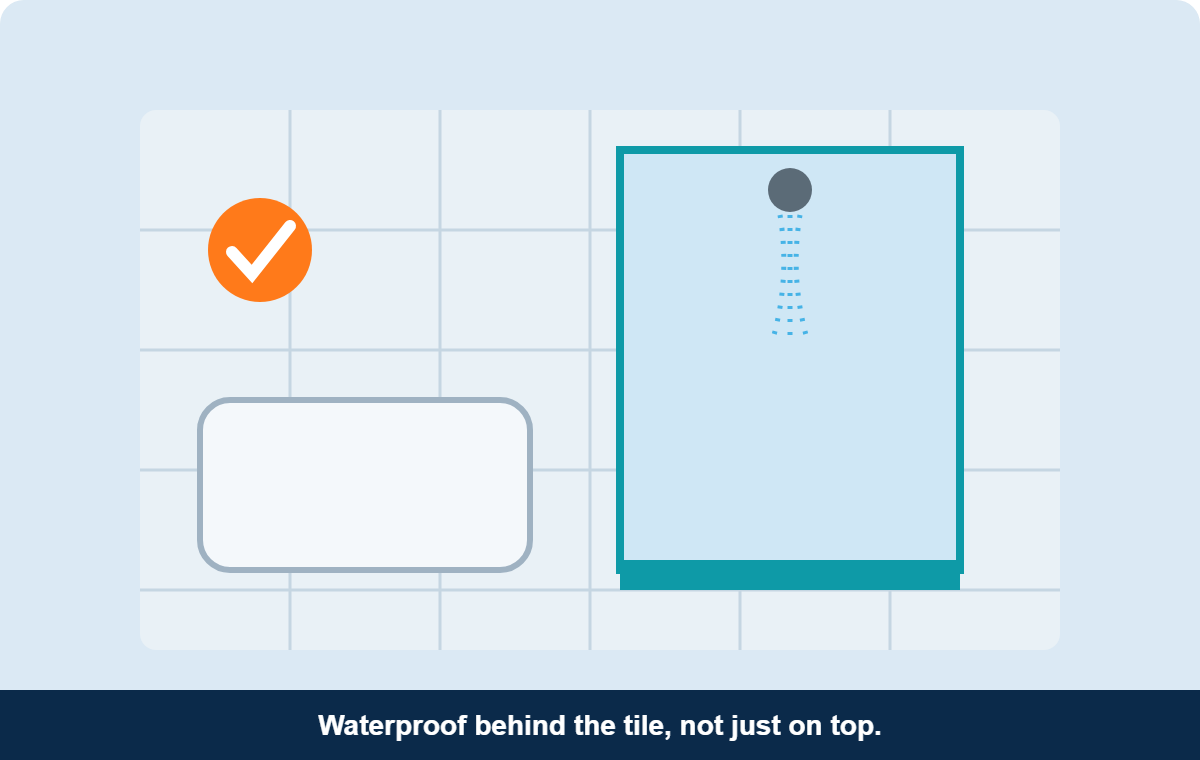
Bathrooms at a Glance
Behind tile
is where shower leaks start and hide
Pan and curb
are the most failure-prone parts of a shower
Flood test
is the standard check before tile goes on
Slope
keeps water moving to the drain
Quick Answer: What Is Bathroom Waterproofing in Davie, FL?
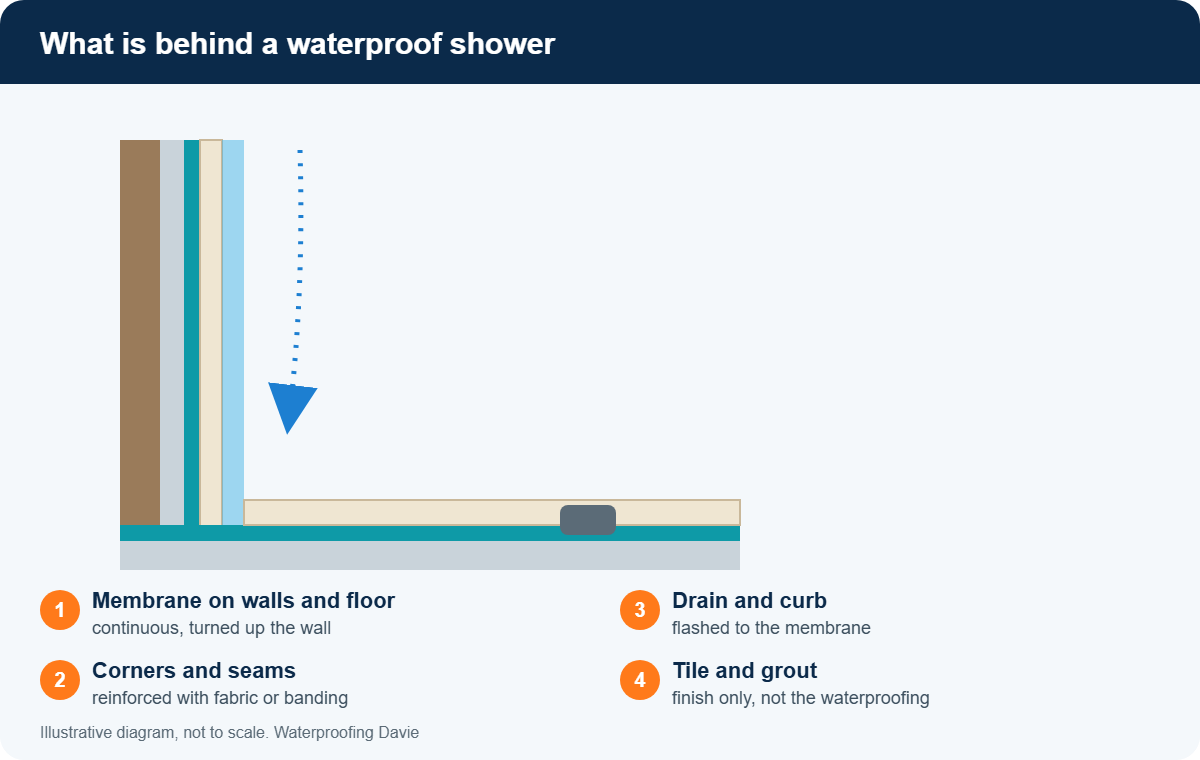
Bathroom and shower waterproofing is a continuous waterproof layer behind and under tile in showers, tub surrounds and wet floors. It includes the shower pan or base, a membrane on the walls, sealed corners, seams and penetrations, flashed drains and curbs, and finishing details at doors and floors. It keeps water out of framing, subfloors and neighboring rooms. Call (754) 258-3576 or text photos for a written estimate from an independent local contractor.
Bathroom leaks are part of the larger moisture picture. See our interior and exterior waterproofing help in Davie.
Signs Your Bathroom or Shower Is Leaking
Check the shower, the walls around it and the rooms next to it.
Loose, cracked or hollow tile
Tile that moves or sounds hollow can mean water is getting behind it and loosening the bed.
Soft or stained walls
Bubbling paint, soft drywall and stains on walls outside the shower show water is passing through.
Musty odors
A persistent damp smell near the shower can mean hidden moisture.
Ceiling stains below
Water marks under a bathroom point to leaks through the floor or pan.
How Showers Leak
Tile and grout slow water but do not stop it. Water passes through grout lines and cracks and reaches whatever is behind the tile. If a proper membrane is not there, or it has gaps, water soaks framing, backer board and subfloor.
The pan or base, the corners, the drain, the curb and every plumbing penetration are the weak points. Movement and age open small cracks in sealant, and water finds them.
Good waterproofing is a continuous membrane. It covers the floor and walls, turns up at the curb and is sealed at every seam and penetration. It should be tested before tile goes over it.
Shower and Bathroom Waterproofing Systems Compared
Systems differ in installation and flexibility.
| System | What it is | Best for | Watch out for |
|---|---|---|---|
| Liquid-applied membrane | Roll-on or spray-on layer that cures into a seamless membrane | Custom showers and tricky shapes | Needs the correct thickness and cure time |
| Sheet membrane | Fabric or polyethylene sheets bonded with thinset | Standard showers and walls | Seams and corners must be sealed |
| Foam board systems | Waterproof foam boards with sealed seams | Fast installs and curbless showers | Seams and penetrations are critical |
| Preformed shower pans | Ready-made bases that meet the wall membrane | Standard shower sizes | Transitions must be sealed carefully |
| Traditional pan liner | Flexible liner under a mortar bed | Classic mortar-bed showers | Drain connection and slope need care |
| Surface sealants | Sealants at corners, joints and fixtures | Maintenance of existing showers | Not a substitute for a membrane |
Ask which system the contractor will use and how it will be tested before tile is installed.
Waterproofing by Bathroom Area
Each part of the bathroom has its own needs.
The floor takes the most water.
- Slope the base toward the drain
- Install the membrane and flash the drain
- Flood test before tile
A failed pan can leak into the floor below.
Walls need protection to the right height.
- Install a membrane or waterproof backer
- Seal seams and corners
- Turn the membrane up and over the curb
Water reaching the framing can be hard to see.
Details create extra seams.
- Slope shelves and benches so water runs off
- Wrap curbs and niches in the membrane
- Seal transitions between surfaces
Flat shelves hold water and stress sealants.
Tubs concentrate water on walls and floors.
- Seal the joint between the tub and wall
- Protect the wall above the tub
- Check the deck and access panels
Movement at the tub edge breaks sealant over time.
Water leaves the shower on feet and towels.
- Seal floor-wall joints
- Protect thresholds and door frames
- Use a floor membrane in wet rooms
Wet-room designs need waterproofing across the whole floor.
How Bathroom Waterproofing Works: Four Steps
A reliable job follows this order.
1
Investigate
Check tile, grout, sealant and walls, use moisture checks where appropriate and identify the likely path of water.
2
Open and repair
Remove tile and damaged materials as needed, dry and repair framing, subfloor and backer.
3
Install membrane and test
Apply the membrane, flash the drain and corners and flood test the base.
4
Tile and finish
Set tile, grout and apply sealant, then review care and warranty terms.
Common Bathroom Leak Sources
| What you see | What it usually means | Typical response |
|---|---|---|
| Cracked or missing caulk | Movement and age | Remove and replace with a suitable sealant |
| Loose tile at the base | Water behind the tile | Open the area and check the membrane |
| Stain on the ceiling below | Pan or drain leak | Investigate and flood test |
| Wet baseboards outside the shower | Water escaping at the curb or door | Check curb, door and floor seals |
| Soft drywall | Moisture in the wall | Open, dry and repair the wall |
| Leaking around fixtures | Failed seal at valves or spouts | Reseal or reinstall fixtures with proper seals |
Reseal, Repair or Rebuild?
| Condition | Typical approach | Why |
|---|---|---|
| Cracked caulk, dry walls | Reseal joints | Fixes minor leaks cheaply |
| Isolated loose tile | Remove and repair the area | Small repair if the membrane is intact |
| Leaks at the pan or drain | Rebuild the base and membrane | Surface repairs will not stop it |
| Soft walls or rot | Remove damage, dry and rebuild | Water damage must be removed first |
| Repeated leaks after repairs | Investigate the whole system | The path of water may be elsewhere |
If you suspect plumbing leaks, ask a licensed plumber to check supply and drain lines.
What Affects the Cost of Bathroom Waterproofing
We do not quote prices by phone because every bathroom differs.
| Factor | Why it matters | Effect on cost |
|---|---|---|
| Size of the shower or bathroom | More area means more material and time | Higher with size |
| Condition behind the tile | Damaged framing or subfloor adds repair scope | Higher |
| System selected | Membranes and boards differ in cost | Varies |
| Tile and finishes | Removing and replacing tile adds cost | Higher |
| Plumbing and fixtures | Drains and valves may need work by a plumber | Varies |
| Schedule and access | Drying, testing and curing time affect the timeline | Can add time |
Mistakes That Cause Shower Leaks
- Relying on grout and caulk alone. They are finishes, not waterproofing.
- Skipping the flood test. Problems found after tiling mean tearing it out.
- Flat shelves and benches. Water pools and attacks sealants.
- Poor slope to the drain. Standing water stresses every joint.
- Unsealed seams and penetrations. Valves, niches and corners leak first.
- Ignoring moisture in the walls. Covering damp materials causes recurring problems.
- Choosing only on price. Thin or incomplete membranes fail.
Why Bathroom Moisture Is a Challenge in Davie
Davie’s climate makes bathrooms work hard.
Constant humidity
Humid air makes bathrooms slow to dry, which stresses sealants and keeps materials damp.
Slab-on-grade homes
Many homes are built on slabs, so a pan or floor leak can go into the slab and stay damp for a long time.
Older homes and remodels
Older showers may have liners and mortar beds that have reached the end of their life, and remodeled bathrooms may have mixed systems. For help finding where water is entering, see our page on waterproofing inspection and moisture surveys.
Exterior walls and windows
Bathroom windows and exterior walls let rain in as well. Moisture from outside may look like a bathroom leak. See our overview of moisture control for how to separate the sources.
A Bathroom Care Calendar for Davie
| When | What to do | Why it helps |
|---|---|---|
| Monthly | Check caulk lines, drains and visible grout. | Early notice keeps repairs small. |
| Every spring | Inspect sealant, tile and fixtures and clear drains. | Prepares for humid months. |
| Rainy season (May – Oct) | Run exhaust fans and watch for condensation and musty odors. | Humidity peaks in summer. |
| After a leak or plumbing repair | Dry the area and check adjoining rooms. | Prevents hidden damage. |
| Before a remodel | Plan waterproofing and testing first. | Prevents costly tile removal later. |
Bathroom Waterproofing for Different Property Types
| Property type | Common situation | What owners usually need |
|---|---|---|
| Single-family homes | Leaking shower, loose tile and stained walls | Pan and membrane repair or rebuild |
| Condominiums | Leaks into units below | Coordinated repair with association and neighbors |
| Rental properties | Turnover repairs and recurring leaks | Durable, quick systems and clear scope |
| Hotels and multifamily | Many identical bathrooms | Repeatable systems and phasing |
| Accessible bathrooms | Curbless or roll-in showers | Careful slope and wet-room waterproofing |
What a Good Bathroom Estimate Should Include
- Findings: photos and moisture checks.
- Scope of demolition: what will be removed and what will stay.
- The exact system: membrane type, thickness and accessories.
- Details: drains, curbs, niches, corners and penetrations.
- Testing: flood test before tile and who witnesses it.
- Trades involved: plumber, tile setter and others.
- Schedule: drying, curing and testing time.
- Warranty: what is covered, for how long and what voids it.
Caring for a Waterproofed Bathroom
- Run the exhaust fan during and after showers.
- Wipe down walls and glass and keep the floor dry.
- Re-caulk joints when they crack or discolor.
- Do not use harsh abrasives on grout and sealants.
- Fix dripping fixtures and slow leaks promptly.
- Keep documentation for membranes, tile and warranties.
Questions to Ask Before You Approve Bathroom Work
| Question | Why it matters | What a good answer sounds like |
|---|---|---|
| What waterproofing system will you use? | Systems differ in how they are installed | Product and layers are named in writing |
| Will you flood test the shower? | Testing finds problems early | A test is part of the scope |
| How will you handle corners and penetrations? | These are the weak points | Seam treatments are described |
| What will you do about damaged framing? | Rot must be addressed | Repair or replacement is part of the plan |
| Who handles plumbing and tile? | Coordination avoids delays | Roles are written out |
| What does the warranty cover? | Terms vary widely | Written terms with exclusions listed |
Showers, Slabs and the Rooms Around Them
A shower leak does not always show up in the shower. Water can run along framing or slab and appear in a closet, hallway or the room below. That is why leaks are often found late, after stains and odors have developed.
Look beyond the shower. Check baseboards, adjoining walls and ceilings below. If you find moisture in several places, tell the contractor so they can look at the full path of the water instead of only the visible tile.
Moisture, Mold and Who to Call
Persistent moisture can lead to mold growth. Waterproofing contractors stop the water and repair the building materials, but mold testing and removal are specialized services.
If you see or suspect mold, contact a licensed mold assessor or remediator. Neither Waterproofing Davie nor the independent contractors we refer perform mold remediation. Once the moisture source is fixed and any mold is handled by the right professional, the area can be rebuilt and waterproofed.
Tile, Grout and Sealant: What They Do and Do Not Do
Many shower leaks start with a misunderstanding about what tile finishes can handle.
Tile
Ceramic and porcelain tile resist water, but natural stone can absorb it and needs sealing. Tile protects the membrane from wear but is not the waterproofing layer.
Grout
Cement grout is porous and cracks over time. Epoxy and urethane grouts resist staining better, but even they allow some water through under pressure. Sealing grout helps but does not replace a membrane.
Sealant at changes of plane
Corners, tub edges and floor-wall joints should be sealed with flexible sealant rather than grout, because these joints move. Replace sealant when it cracks, peels or darkens.
Glass and fixtures
Shower doors, valves and niches create penetrations and joints. Each needs sealant or flashing that matches how the assembly was built.
Bathroom Waterproofing Timeline
Every project differs, but most follow this general pattern.
| Stage | What happens | General notes |
|---|---|---|
| Investigation | Inspect, check moisture and review the likely water path | Defines the real scope |
| Demolition and drying | Remove damaged tile and materials and let the area dry | Drying time varies with conditions |
| Repair and membrane | Repair framing, set the base and apply the membrane | Flood test happens here |
| Tile and finishing | Set tile, grout and seal joints | Cure times apply before use |
| Final walkthrough | Inspect the work and review care and warranty documents | Keep paperwork for future service |
Remodeling a Bathroom? Plan Waterproofing First
Waterproofing is easiest and cheapest when the walls are open. A remodel is the best moment to fix what is behind the tile.
Decide on the system early
Choose the membrane system before tile is ordered so that thickness, transitions and drains line up. Mixing products from different makers can void warranties.
Design the slope
Floors should slope to the drain in every direction, and benches and niches should slope back into the shower. Curbless showers need extra care with floor depth and drain location.
Plan for testing
Schedule a flood test before tile goes on, and take dated photos of each stage. These records help with future repairs and any warranty claim.
Coordinate the trades
The plumber, waterproofing crew and tile setter work in sequence. Agreeing on who is responsible for each step, in writing, prevents gaps where leaks start.
Ventilation matters too
A properly sized exhaust fan that vents outside reduces humidity and protects finishes after the project is done.
Who Does the Work
Waterproofing Davie is a local referral service. We do not perform the work ourselves. Independent contractors do the work and provide their own written estimate, warranty terms, license and insurance details. Before you approve work, ask the contractor to confirm their Florida license and insurance in writing and verify both with the State of Florida. Shower work often involves tile setters, plumbers and waterproofing crews, so the scope and who is responsible for each stage should be written down.
Frequently Asked Questions About Bathroom and Shower Waterproofing in Davie
Related Waterproofing Services
Get a Bathroom Waterproofing Estimate in Davie
Tell us about the bathroom or shower, the stains or loose tile you see and what is on the other side of the wall. Photos help. You will get a plain-language explanation and a written estimate before any work starts.