
Home › Services › Drainage & Water Management
Drainage and Water Management in Davie, FL
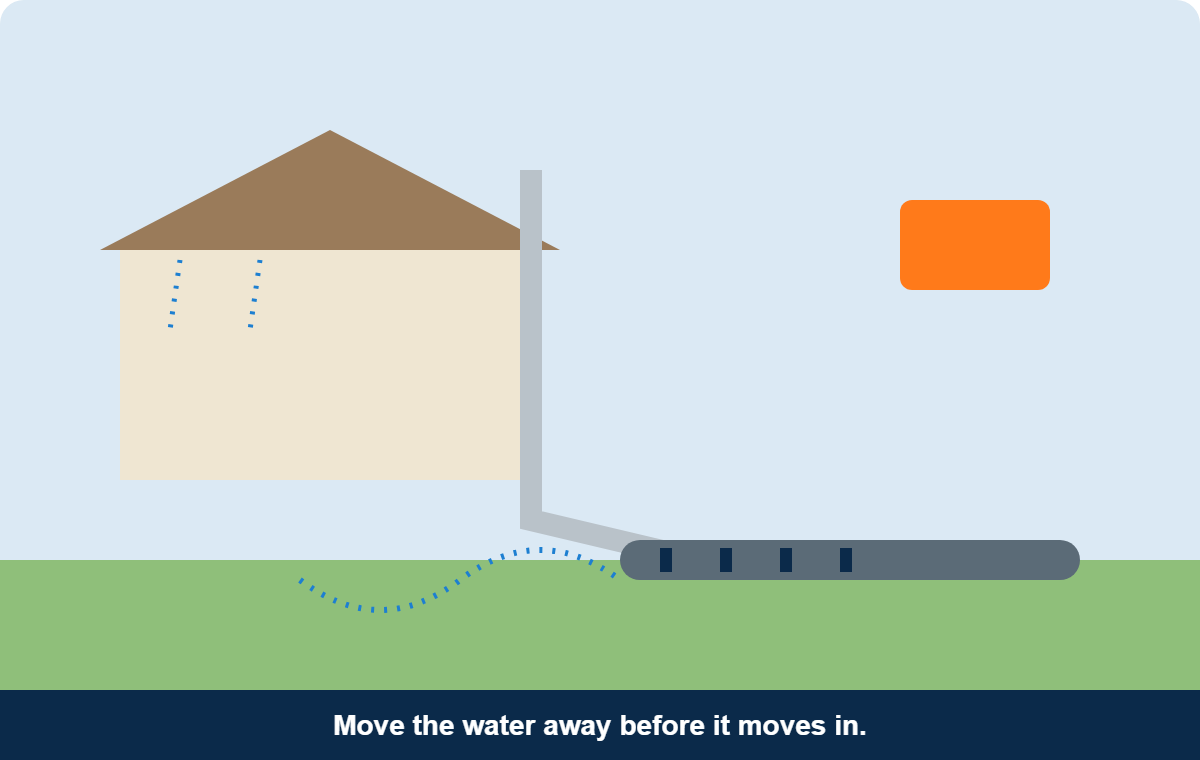
Waterproofing works best when water has somewhere to go. Gutters, grading, drains and swales move rain away from walls, slabs and foundations before it can cause damage. Drainage solutions in Davie, FL start with a plan for where the rain goes.
Local referral to independent contractors · Written estimate before work starts · Emergency leaks welcome
Drainage at a Glance
~60 in.
of rain a year has to go somewhere
Flat terrain
means grading and swales matter more
Downspouts
are the easiest way to stop water at the wall
Roof to ground
every step of the path must work
Quick Answer: What Are Drainage Solutions in Davie, FL?
Drainage and water management is the set of gutters, downspouts, grading, drains and swales that carry rain away from a building. It is often the cheapest and most effective way to reduce leaks, damp walls and foundation moisture, and it makes every other waterproofing repair last longer. Call (754) 258-3576 or text photos and a description of where water collects for a written estimate from an independent local contractor.
Drainage is the first step in many waterproofing plans. See our approach to water management and waterproofing in Davie.
Signs You Have a Drainage Problem
Walk around the property during or just after rain.
Puddles near walls and slabs
Water that stands beside the building or on patios is likely to find its way in.
Overflowing gutters
Water pouring over gutters or running down walls means gutters are clogged, undersized or pitched wrong.
Stains and wet bases
Dark or streaked walls near the ground and damp slab edges show repeated wetting.
Erosion and washed-out soil
Bare spots, exposed roots and gullies show where water is moving fast.
How Poor Drainage Damages Buildings
Water that collects at a wall soaks the lower courses of stucco and block, seeps through cracks and joints and presses against slabs. Wet soil also swells, shifts and erodes, which can lead to settling and cracks.
Roof water is a major source. A modest roof sheds a large volume of water in each storm, and if it lands beside the foundation, the ground there is soaked again and again.
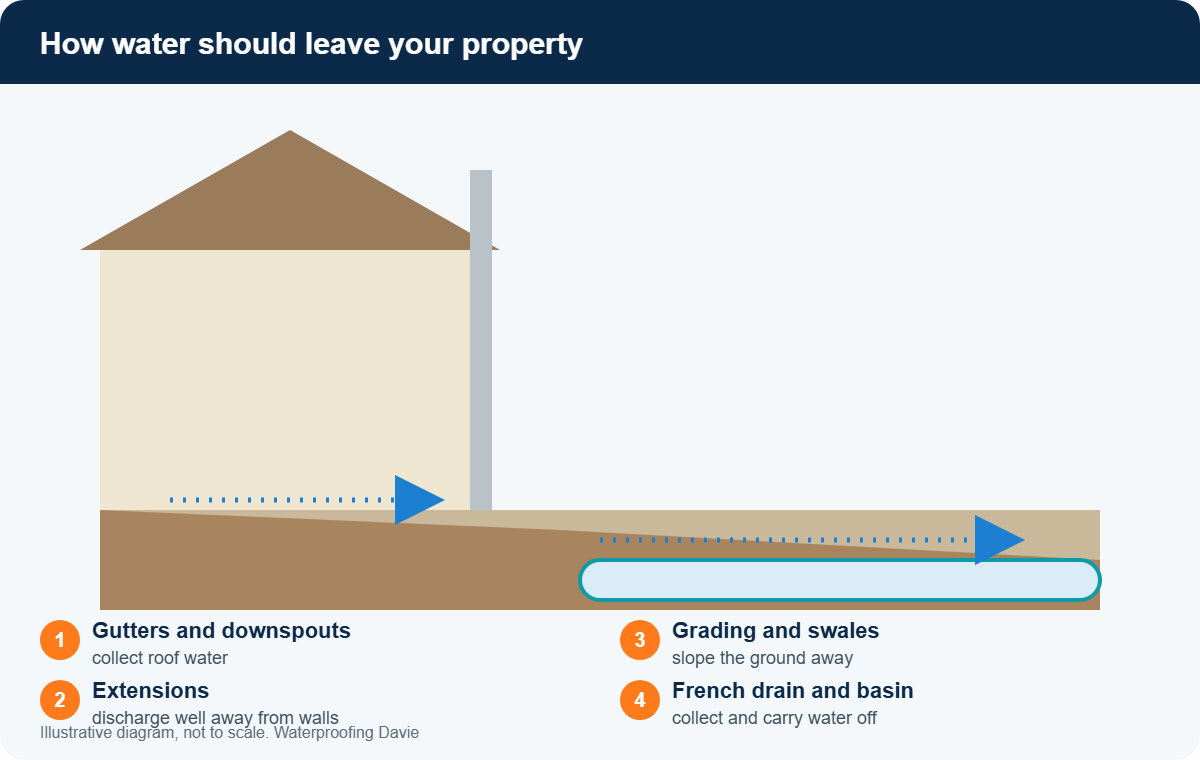
Drainage fixes the source. Gutters and downspouts collect roof water, extensions carry it away, grading directs surface water and drains remove what remains. Without these steps, sealing and coating are fighting constant water.
Drainage Solutions Compared
Different problems call for different tools.
| Solution | What it does | Best for | Watch out for |
|---|---|---|---|
| Gutters and downspouts | Collect roof water and direct it | Roofs that shed water against walls | Need cleaning and the right size |
| Downspout extensions and tie-ins | Carry water away from the foundation | Downspouts that discharge at walls | Must end where water can drain freely |
| Regrading and swales | Reshape the ground so water flows away | Flat yards and low spots near walls | Must not send water to neighbors |
| French drains | Collect and carry shallow groundwater | Wet yards and low areas | Need an outlet and proper filter fabric |
| Catch basins and area drains | Collect surface water and pipe it away | Patios, courtyards and low spots | Can clog without maintenance |
| Dry wells and infiltration basins | Let water soak into the ground | Where soil and water table allow it | High water tables limit effectiveness |
| Permeable surfaces | Allow water to pass through paving | Driveways and walkways | Need maintenance to avoid clogging |
Ask how the contractor determined where the water will go and why that outlet is allowed.
Drainage by Area of the Property
Each area has different needs.
Roof water is the first thing to manage.
- Clean and repair gutters and downspouts
- Check slope and size for heavy rain
- Add extensions or underground tie-ins
Make sure water is discharged far from walls.
Ground should slope away from walls.
- Add soil or regrade near the building
- Create swales to guide flow
- Keep mulch and planters from blocking drainage
Even small changes in slope can make a big difference.
Hardscape can direct water toward the building.
- Check slope and joints
- Add drains or channel drains where needed
- Seal cracks and joints
Standing water on slabs is a warning sign.
Water from driveways can reach garage doors.
- Add trench or channel drains at the garage
- Seal joints at slab edges
- Check slope toward the street or swale
Garage doors are a common water entry point.
Low areas collect water.
- Install drains and basins where water collects
- Provide a reliable outlet
- Consider pumps only where a gravity outlet is not possible
Pumps need power and maintenance.
How a Drainage Project Works: Four Steps
A sound plan follows this order.
1
Observe and map
Study the roof, gutters, grading and where water collects, ideally during rain.
2
Plan the water path
Decide where each source of water will go and confirm that the outlet is legal and workable.
3
Install and correct
Install gutters, drains, grading and swales and correct slopes and low spots.
4
Test and maintain
Run water through the system, confirm flow and review maintenance steps.
Common Drainage Problems and Likely Fixes
| What you see | What it usually means | Typical response |
|---|---|---|
| Puddles at the wall | Ground slopes toward the building | Regrade or add a drain |
| Downspout dumping at the foundation | Missing extension or tie-in | Extend or pipe the water away |
| Gutters overflowing | Clogged or undersized gutters | Clean and resize or add downspouts |
| Soggy yard after rain | High water table or low area | Add swales, French drains or basins |
| Water at garage door | Driveway slopes toward garage | Install channel drain and regrade |
| Eroded soil along walls | Fast roof runoff or poor grading | Control runoff and restore soil and plants |
Quick Fix or Full Drainage Plan?
| Condition | Typical approach | Why |
|---|---|---|
| One downspout dumping at a wall | Add an extension or tie-in | Simple, inexpensive fix |
| Clogged or missing gutters | Clean, repair or replace | Restores roof water control |
| Low spots near the building | Regrade and add soil | Redirects surface water |
| Wet yard or persistent standing water | Design a drainage system | Needs correct outlet and capacity |
| Water entering walls or slabs | Combine drainage with sealing and repair | Source control and protection work together |
Often the best first step is to fix the water source before paying for coating or repair work.
What Affects the Cost of Drainage Work
We do not quote prices by phone because every property differs.
| Factor | Why it matters | Effect on cost |
|---|---|---|
| Size of the property and roof | More roof and ground means more water to manage | Higher |
| Grading and excavation | Moving soil takes labor and equipment | Higher |
| Type of system | Gutters, drains and basins differ in complexity | Varies |
| Outlet availability | Distance and legal discharge points affect piping | Varies |
| Access and landscaping | Trees, fences and hardscape add work | Higher |
| Permits and approvals | Some work needs permits or coordination | Varies |
Mistakes That Make Drainage Problems Worse
- Dumping water on a neighbor. It can create disputes and legal issues.
- Burying downspouts without an outlet. Water backs up and returns to the wall.
- Using fabric or pipe that clogs. French drains need correct filter fabric and slope.
- Piling mulch or soil against walls. It traps moisture and blocks flow.
- Ignoring maintenance. Gutters and basins clog quickly in tree-heavy yards.
- Treating the symptom only. Sealing a wall without fixing water at the base is temporary.
- Choosing only on price. Poor slopes and undersized pipes fail in the first heavy storm.
Why Drainage Matters So Much in Davie
South Florida’s flat terrain and heavy rain make drainage a key issue.
Flat land, high water table
With little slope and groundwater close to the surface, water has few places to go. Swales, canals and storm drains carry much of the load, and private drainage needs to work with them.
Intense summer storms
A single storm can deliver inches of rain in an hour. Roofs and gutters must handle that volume, and downspouts must have somewhere to send it.
Sandy and limestone soils
Soil conditions vary and affect how quickly water soaks in. Some areas drain fast and others hold water for days.
Slab-on-grade homes
Most local homes sit close to ground level. Water at the slab edge can enter at joints and cracks, as discussed on our foundation and slab waterproofing page. Surfaces such as driveways and patios are covered on our concrete sealing page.
A Drainage Care Calendar for Davie
| When | What to do | Why it helps |
|---|---|---|
| Late winter to spring (Feb – Apr) | Clean gutters, check downspouts, inspect grading and clear swales. | Prepares for the rainy season. |
| Rainy season (May – Oct) | Watch where water goes during storms and clear debris after heavy rain. | Early notice keeps problems small. |
| Before a named storm (Jun 1 – Nov 30) | Clear gutters, drains and swales and remove loose debris. | Helps water move away quickly. |
| After a major storm | Check for erosion, clogs and standing water. | Quick repair prevents further damage. |
| Drier months (Nov – Jan) | Schedule regrading, drains and larger projects. | Dry ground makes digging and testing easier. |
Drainage for Different Property Types
| Property type | Common situation | What owners usually need |
|---|---|---|
| Single-family homes | Downspouts at walls and low spots in the yard | Gutters, extensions and local grading |
| Townhomes and HOA communities | Shared drainage and uniform standards | Coordination with the association and common areas |
| Condominiums | Courtyards and garage entries | Drains, channel drains and maintenance plans |
| Commercial properties | Parking lots and loading areas | Larger drains, grading and permits |
| Rental properties | Recurring issues and tight turnarounds | Low-maintenance solutions and clear scope |
What a Good Drainage Estimate Should Include
- Observations: photos and notes on where and when water collects.
- Water plan: where each source of water will go.
- Outlet: where water leaves the property and why that is allowed.
- Materials: pipe sizes, gutter sizes, fabric and gravel.
- Grading details: slopes and areas to be changed.
- Restoration: how landscaping, hardscape and irrigation will be repaired.
- Permits: which approvals are needed.
- Schedule and testing: how the system will be tested.
- Warranty: what is covered, for how long and what voids it.
Caring for Drainage Systems
- Clean gutters and downspouts before and during the rainy season.
- Check that extensions and drains are clear and in place.
- Keep swales and catch basins free of leaves and debris.
- Keep soil and mulch below slab edges and siding.
- Aim sprinklers away from walls and slabs.
- Check systems after storms and fix small issues early.
Questions to Ask Before You Approve Drainage Work
| Question | Why it matters | What a good answer sounds like |
|---|---|---|
| Where will the water go? | A system without a legal outlet fails | A specific outlet is identified |
| How did you size the system? | Undersized systems overflow | Capacity is explained |
| Will this affect my neighbors? | Redirecting water can cause disputes | The plan avoids sending water to adjacent lots |
| How will you restore the landscape? | Digging disrupts yards | Restoration is in the scope |
| What maintenance will it need? | All drainage clogs eventually | Maintenance steps are described |
| What does the warranty cover? | Terms vary widely | Written terms with exclusions listed |
Roof Water: The Biggest Source and the Easiest Fix
A typical roof sends a surprising amount of water to a few points. Every inch of rain on a roof of 2,000 square feet produces well over a thousand gallons, and it all has to go somewhere.
Gutter size and pitch
Gutters need to be large enough for local storms and pitched slightly toward downspouts. Sagging or flat gutters hold water and overflow at the lowest point.
Downspout placement
More downspouts and larger ones help in heavy rain. Place them where water can be carried away easily, not at corners where it pools.
Roof valleys and splash
Valleys and areas where one roof drains onto another concentrate water. Splash guards and diverters help protect walls and lower roofs. For roofing repairs themselves, see our roof leak repair page.
Drainage Project Timeline
Every project differs, but most follow this general pattern.
| Stage | What happens | General notes |
|---|---|---|
| Observation | Study water paths, ideally during rain | Photos guide the plan |
| Design and approvals | Choose solutions and confirm outlets and permits | May take longer than the work |
| Installation | Install gutters, drains and grading | Weather affects timing |
| Testing | Run water through the system | Confirm flow and fix issues |
| Restoration and review | Repair landscaping and review care instructions | Keep records for future service |
Grading, Swales and Working With Neighbors
Because lots in Davie are flat and close together, one property’s drainage affects the next. A good plan respects the larger system.
Know where water is allowed to go
Water generally needs to leave a lot toward the street, a swale or a drainage easement, not onto a neighbor. Many communities have drainage plans and rules about altering grades.
Keep swales working
Swales only work if they are graded and clear. Driveway culverts, landscaping and fill can block them. Restoring original swale shape often helps a whole block.
Check before you change
Before altering grades, building walls or installing underground pipe, check with your association and local authorities. A contractor can help confirm what is allowed.
Document conditions
Take dated photos of water behavior before and after any change. They help show that your work improved drainage and did not create a problem elsewhere.
When Drainage Is Not Enough
Drainage reduces water against a building, but it does not repair existing damage. If you already have cracks, failed sealant or wet slabs, you will likely need waterproofing work in addition to drainage.
Use both approaches together. Fix the water source, then seal and repair the building envelope. If you are not sure where water is entering, a moisture survey can show the best order of work.
Who Does the Work
Waterproofing Davie is a local referral service. We do not perform the work ourselves. Independent contractors do the work and provide their own written estimate, warranty terms, license and insurance details. Before you approve work, ask the contractor to confirm their Florida license and insurance in writing and verify both with the State of Florida. Drainage jobs can involve landscape, concrete, plumbing and grading, so the scope and who handles each part should be agreed in writing.
Frequently Asked Questions About Drainage and Water Management in Davie
Related Waterproofing Services
Get a Drainage Estimate in Davie
Tell us where water collects, what the roof and gutters look like and whether you see wet walls or slabs. Photos taken during rain help most. You will get a plain-language explanation and a written estimate before any work starts.