Basement Waterproofing in Florida? Why Davie Homes Rarely Have Basements and What Floods Instead
If you searched for basement waterproofing near me from Davie, you have probably noticed something odd: almost nobody here does basements. South Florida is flat, low and sits on a shallow water table, so builders rarely dig down. Yet Davie homes and condos still flood, and the reasons are worth understanding before you spend money on the wrong fix.
This guide explains why basements are rare in Broward County, what actually floods in their place (garages, slabs, sunken rooms, stairwells and below-grade parking), and which waterproofing and drainage fixes address each problem. If your issue is water that pools outside after a storm, our drainage solutions page is a good companion to this article.
Quick Answer
Most Davie homes are built slab-on-grade with no basement, so national basement waterproofing advice (interior drains, sump systems, crawl space encapsulation) often does not apply. The usual trouble spots here are garages, ground-floor slabs, sunken rooms, patios and below-grade parking areas, and the fixes are grading, drainage, crack sealing, exterior waterproofing at below-grade walls and moisture control.
In This Guide
- Basement Waterproofing in Florida: Why Davie Homes Rarely Have Basements
- What Actually Floods in Davie Homes
- Why Water Gets In: The Four Main Paths
- Fixes That Work in Florida (and Ones That Do Not)
- What About Sump Pumps, Crawl Spaces and Vapor Barriers?
- How to Check Your Own Property Before Calling Anyone
- Flood Insurance and Waterproofing Are Not the Same Thing
- When to Call a Professional
- Garages, Sunken Rooms and Stairwells
- Below-Grade Parking and Equipment Rooms
- What to Do Before the Next Storm
- Frequently Asked Questions
Basement Waterproofing in Florida: Why Davie Homes Rarely Have Basements
Basements depend on soil that drains and groundwater that stays well below the floor. South Florida offers the opposite. The land is flat and low, the water table is shallow, and the regional flood-control system of canals and pump stations exists precisely to keep groundwater and rainfall from covering developed land. Digging below grade in those conditions means fighting water constantly, so builders pour slab-on-grade foundations and raise the structure above the ground instead.
That is why national search terms like “basement waterproofing companies near me”, “foundation waterproofing near me” and “crawl space waterproofing” send many Floridians to contractors who work somewhere else. The materials overlap, but the problems and solutions are different here.
What Actually Floods in Davie Homes
- Garages: the garage slab is often lower than the house floor and sits close to the driveway grade, so water pushes in at the door threshold and through slab joints.
- Ground-floor slabs: damp or sweating floors, stained flooring and musty smells often come from moisture moving up through the slab.
- Sunken living rooms and entries: a step down means a lower threshold for water.
- Patios, lanais and pool decks: slabs that slope toward the house channel water to the wall.
- Below-grade stairwells and parking levels: some condos and commercial buildings have below-grade areas that behave like basements.
- Utility rooms, elevator pits and generator pads: low spots that collect water first.
Why Water Gets In: The Four Main Paths
Rain that cannot drain away
Davie can receive heavy rain in a short time. When streets, swales and storm drains are full, water has nowhere to go and rises toward doors and garage thresholds. During major storms, local officials have noted that the Town does not pump water out of private homes, so the property itself needs to shed water.
High groundwater
When canals and the water table are high after days of rain, moisture is pushed up through slabs and cracks. This is not a leak from a pipe or a roof, which is why homeowners are surprised when a floor is wet in the middle of a dry-looking house.
Poor grading and clogged drains
A yard that slopes toward the house, downspouts that dump next to the wall, and drains packed with leaves or sand all send water to the foundation.
Cracks, joints and penetrations
Slab control joints, hairline cracks and pipe penetrations give water a path. Our guide to foundation and slab cracks in Davie explains which cracks are cosmetic and which need attention.
Fixes That Work in Florida (and Ones That Do Not)
| Problem | Fix that usually works | Fix that often does not |
|---|---|---|
| Water pooling at the garage door | Regrade the approach, add a trench drain or threshold seal | Painting the floor with waterproof paint |
| Wet slab or sweating floor | Moisture testing, crack and joint sealing, vapor-resistant flooring, dehumidification | Gluing new flooring over a damp slab |
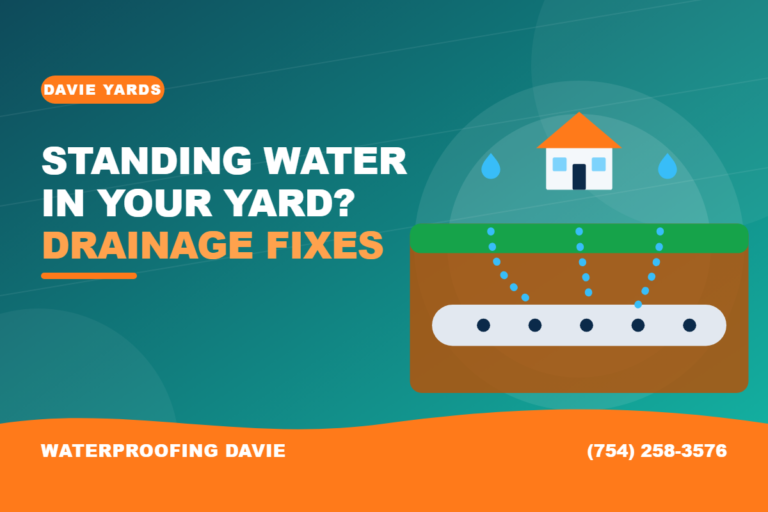
| Water at the wall after rain | Gutters, downspout extensions, grading, French drain | Caulking the wall only |
| Below-grade wall or stairwell | Exterior waterproofing membrane with drainage, crack injection | Interior sealer alone against active leaks |
| Persistent high humidity | Moisture control, dehumidifier, ventilation | Closing the house up tighter |
Our moisture control service page covers the humidity side, and our concrete sealing page explains how slabs and walkways can be treated against water entry.
What About Sump Pumps, Crawl Spaces and Vapor Barriers?
Crawl space waterproofing, crawl space encapsulation and basement winterization are common national searches. In Florida, crawl spaces are uncommon, and winterizing is not a concern. Vapor barriers or retarders under slabs are standard in many new builds, but they cannot be added to an existing slab, so existing homes rely on surface sealing, drainage and dehumidification instead. Sump pumps are used only in special below-grade spaces, and they need a safe discharge point and a backup plan for power outages.
How to Check Your Own Property Before Calling Anyone
- Walk the yard during or right after heavy rain and note where water flows and where it pools.
- Check that gutters and downspouts discharge several feet from the wall.
- Look at the slope at the garage door and at door thresholds.
- Photograph cracks, stains and efflorescence (white powder) with a coin for scale.
- Test whether the floor stays damp on dry days, which points to groundwater or vapor rather than rain.
- Write down dates and storm events so a contractor can match symptoms to causes.
Flood Insurance and Waterproofing Are Not the Same Thing
Waterproofing reduces how often and how badly water enters. It does not replace insurance. Standard homeowners policies generally exclude flood damage, and flood coverage is typically a separate policy with a waiting period before it takes effect. Read our guide to flood insurance vs. waterproofing before storm season rather than during it.
When to Call a Professional
- Water enters the garage or house during ordinary heavy rain.
- Floors stay damp or stained even on dry days.
- You see widening cracks, rust staining or efflorescence on walls or slabs.
- You have a below-grade stairwell, parking area or equipment room that floods.
- A previous repair failed.
Garages, Sunken Rooms and Stairwells
Garages sit close to grade and are often the first interior space to take on water. Check the slab-to-wall joint, the garage door threshold and any floor drains. Sunken living rooms, below-grade stairwells and entry wells collect water from yard runoff, so keep their drains clear and make sure the surrounding soil slopes away. Our guide to yard drainage in Davie covers how to move water away before it reaches these low points.
Below-Grade Parking and Equipment Rooms
Condos and commercial buildings often have below-grade parking, elevator pits and equipment rooms. These areas depend on pumps, sealed joints and drainage maintained by the association or building owner. Report seepage, efflorescence and standing water promptly, since long-term moisture can corrode reinforcing steel. See commercial waterproofing for Davie businesses for how larger properties approach the problem.
What to Do Before the Next Storm
- Clear yard drains, swales and the area around stairwell drains.
- Check the garage threshold and seal visible slab cracks.
- Move stored items off the floor and away from exterior walls.
- Test sump or utility pumps if you have them.
- Review the hurricane season waterproofing checklist.
A local contractor can trace the water path and recommend the right mix of grading, drainage, sealing and moisture control. If you want help finding one, waterproofing help for South Florida homes starts with a call to (754) 258-3576, and the contractor gives you a written estimate after inspecting the property.
Frequently Asked Questions
Get a Written Estimate From a Local Contractor
Call or text (754) 258-3576 with your address and a photo of the problem. We connect you with an independent contractor who inspects the property and gives you a written estimate before any work starts.
Waterproofing Davie is a local referral service. Independent contractors perform the work and provide their own estimates, licenses, insurance and warranties, so ask each one for those details in writing. This article is general information and does not replace an on-site inspection.