
Home › Services › Moisture Control
Moisture Control in Davie, FL
Damp walls, stains and musty rooms all start with water. We help you find where it is coming from and stop it at the source. Mold testing and removal are handled by licensed mold professionals, which we do not offer.
Local referral to independent contractors · Written estimate before work starts · Emergency leaks welcome
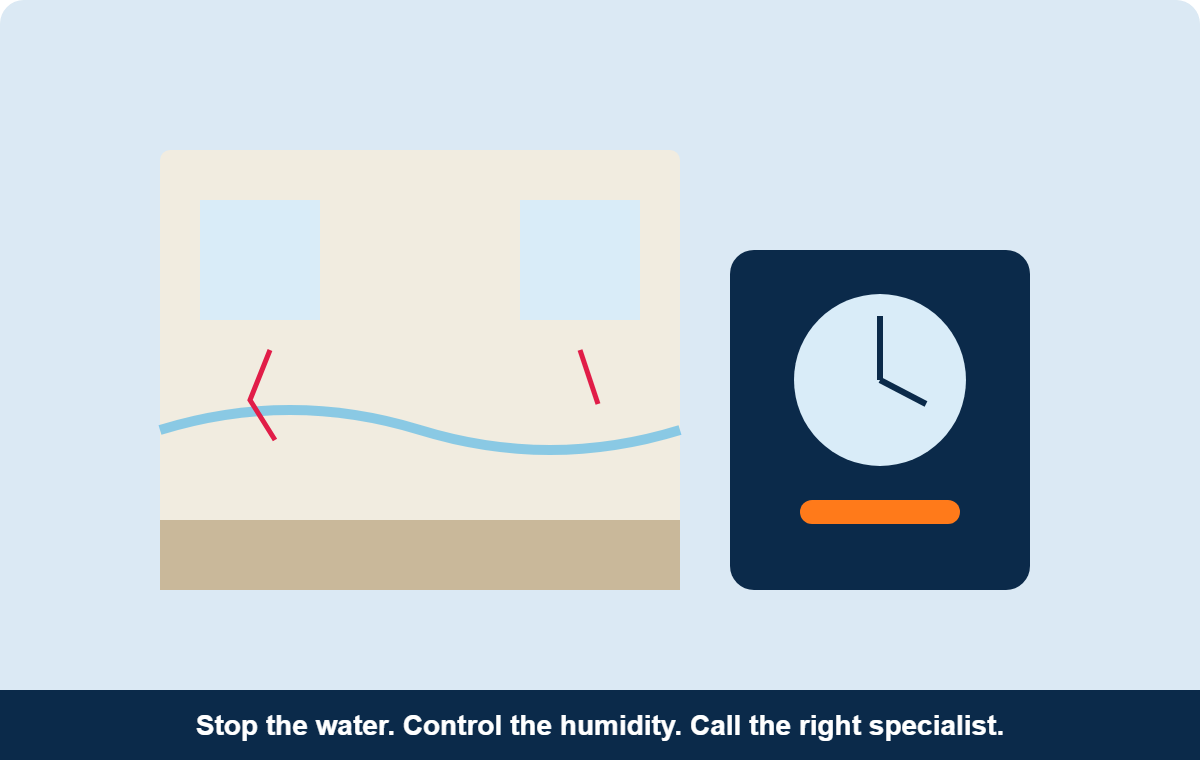
Moisture Control at a Glance
Source first
fix the water before cleaning or finishing
Three sources
outside water, inside water and humidity
Below 60%
a common indoor humidity target
Specialists
plumbers and licensed mold professionals as needed
Quick Answer: What Is Moisture Control, and What Is It Not?
Moisture control is finding and stopping the sources of water and humidity that damage buildings: roof and wall leaks, window and door leaks, slab and drainage issues and, where relevant, humidity and condensation. It leads to sealing, repair and drainage work by independent waterproofing contractors, and to referrals for plumbing, drying and other trades. It is not mold testing or mold removal. Those require a licensed mold professional, and we do not provide them. Call (754) 258-3576 or text photos for a referral.
Moisture problems often involve the whole building. See our whole-building waterproofing help in Davie.
Signs You Have a Moisture Problem
Look for patterns, not just one stain.
Stains and bubbling paint
Brown rings, peeling paint and swollen drywall show water has been present.
Musty smells
A persistent damp odor suggests hidden moisture or poor ventilation.
Condensation and fogged glass
Water on windows, mirrors and cold surfaces points to high humidity.
Warped floors and swollen trim
Wood and laminate swell and cup when they absorb moisture.
Why Moisture Problems Keep Coming Back
Moisture follows three paths: liquid water that enters from outside, water that escapes from plumbing and fixtures and water vapor that condenses on cold surfaces. A fix that handles only one path often leaves the others active.
Cleaning and painting do not stop moisture. Without finding the source, stains return, finishes fail and materials stay damp enough to break down.
The order matters. Stop the source, then dry the area, then repair and finish. If mold is present, a licensed mold professional should handle it before or alongside rebuilding.
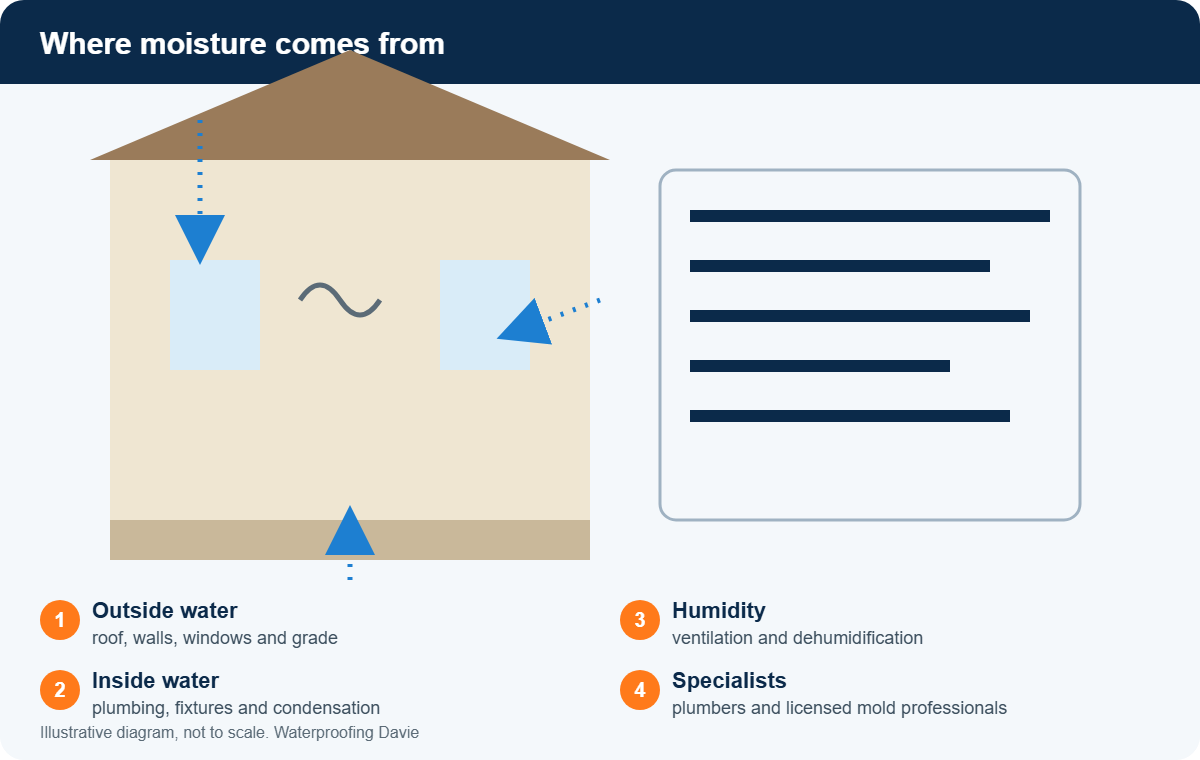
Moisture Sources and Who Fixes Them
This helps you reach the right professional the first time.
| Source | Typical signs | Who usually handles it |
|---|---|---|
| Roof leak | Ceiling stains after rain | Roofing or waterproofing contractor |
| Wall and window leak | Stains near openings and wall cracks | Waterproofing contractor |
| Slab and foundation moisture | Damp floors and wall bases | Waterproofing and drainage contractors |
| Plumbing leak | Stains near fixtures, rising water use | Licensed plumber |
| Condensation and high humidity | Fogged glass, musty rooms | Owner, HVAC professional |
| Water damage drying | Wet materials after a leak or flood | Water restoration company |
| Mold growth | Visible growth or confirmed testing | Licensed mold assessor and remediator |
We do not perform mold testing or removal. We refer waterproofing work and can point you toward the right specialist for the rest.
Moisture Control by Source
Each source needs its own approach.
Rain finds its way through the envelope.
- Seal roofs, walls, joints and windows
- Improve grading, gutters and drainage
- Repair cracks and failed sealant
This is where waterproofing contractors do most of their work.
Plumbing leaks can look like envelope leaks.
- Check for stains near fixtures and walls with pipes
- Watch water bills and meters
- Call a licensed plumber to test and repair
Fix pipe leaks before any waterproofing is done.
Humid air causes damp even without leaks.
- Run exhaust fans and use range hoods
- Keep air conditioning working and sized properly
- Use a hygrometer and dehumidifier where needed
Ventilation and air conditioning are key in this climate.
Moisture can rise through slabs and wall bases.
- Check drainage and grading
- Seal cracks and joints
- Consider sealers or membranes where appropriate
Surface water is often the main driver.
Wet materials need quick attention.
- Stop the source first
- Call a water restoration company for drying and cleanup
- Document damage for insurance
Delays increase the risk of further damage and mold growth.
How Moisture Control Works: Four Steps
A sound approach follows this order.
1
Identify the pattern
Note where and when moisture appears and take photos, dates and humidity readings if you can.
2
Find and stop the source
Use inspection and testing to trace outside water, then seal, repair or improve drainage as needed.
3
Dry and ventilate
Have wet materials dried by the appropriate professional and improve ventilation and humidity control.
4
Rebuild and monitor
Refinish repaired areas and keep monitoring humidity and stains; if mold is found, involve a licensed mold professional.
Moisture Symptoms and Likely Causes
| What you see | What it usually means | Typical next step |
|---|---|---|
| Stain on ceiling after rain | Roof or wall leak | Inspect the roof and flashings |
| Stain that appears without rain | Plumbing or condensation | Call a plumber and check humidity |
| Damp lower wall | Splash, drainage or slab moisture | Check grading and gutters |
| Condensation on windows | High indoor humidity | Improve ventilation and dehumidify |
| Musty smell with no visible stain | Hidden moisture or mold | Inspect and consult a mold professional if needed |
| Warped flooring | Moisture from below or a leak | Find and fix the source before replacing |
Waterproofing, Drying or Mold Work: Which Do You Need?
| Situation | What you need | Who to call |
|---|---|---|
| Water is still entering | Waterproofing or repair | Waterproofing contractor |
| A pipe or fixture leaks | Plumbing repair | Licensed plumber |
| Materials are wet after a leak | Drying and dehumidification | Water restoration company |
| You see or suspect mold | Testing and removal | Licensed mold assessor and remediator |
| Humidity stays high | Ventilation or air conditioning fix | HVAC professional |
Mold work is a licensed specialty. Waterproofing Davie does not perform it, and neither do the contractors we refer for waterproofing.
What Affects the Cost of Moisture Source Repair
We do not quote prices by phone because every building differs.
| Factor | Why it matters | Effect on cost |
|---|---|---|
| How many sources are involved | Multiple sources need multiple fixes | Higher |
| Difficulty of finding the source | Hidden leaks take more investigation | Higher |
| Type of repair | Sealing, coating and drainage work differ in cost | Varies |
| Condition of finishes | Damaged materials add rebuild work | Higher |
| Access | Roofs, attics and wall openings affect time | Varies |
| Other trades needed | Plumbing, drying and mold work are separate | Varies |
Mistakes That Keep Moisture Problems Alive
- Painting over stains. The water is still there and the stain returns.
- Using bleach or cleaners as the only fix. Cleaners do not stop the water source.
- Running a dehumidifier instead of fixing a leak. It treats the symptom.
- Closing up wet walls. Moisture trapped behind finishes causes bigger problems.
- Ignoring plumbing. A pipe leak looks like a roof leak until it is tested.
- Waiting. Damp materials degrade and invite mold the longer they stay wet.
- Expecting a waterproofing contractor to do mold work. Mold is a separate licensed field.
Why Moisture Is a Constant Issue in Davie
South Florida’s climate creates moisture problems even in well-built homes.
High humidity year round
Humid air keeps materials damp and makes drying slow. Air conditioning does much of the work, so a failing system or oversized unit can lead to damp rooms.
Heavy rain and wind-driven water
Storms push water into windows, walls and roof edges. For help locating entry points, see our page on waterproofing inspection and moisture surveys.
Flat terrain and slab construction
Water collects near slabs and walls. Our page on drainage and water management explains how to direct it away.
Closed-up homes
Vacation homes and closed rooms trap humidity. Keep air conditioning running at a safe setting and consider a dehumidifier for closets and storage.
A Moisture Care Calendar for Davie
| When | What to do | Why it helps |
|---|---|---|
| Late winter to spring (Feb – Apr) | Inspect roofs, windows, gutters and drainage, and service air conditioning. | Prepares for humid, rainy months. |
| Rainy season (May – Oct) | Monitor humidity, run exhaust fans and check for stains after storms. | Early notice limits damage. |
| Before a named storm (Jun 1 – Nov 30) | Clear gutters and drains and photograph your home’s condition. | Helps water move away and documents condition. |
| After a major storm | Look for new stains, wet carpets and musty smells; call for help early. | Quick action reduces damage. |
| Drier months (Nov – Jan) | Schedule sealing, coating and drainage work. | Dry weather helps cure and testing. |
Moisture Control for Different Property Types
| Property type | Common situation | What owners usually need |
|---|---|---|
| Single-family homes | Damp walls, window leaks and humidity | Source tracing, sealing and ventilation advice |
| Condominiums | Leaks between units | Coordinated investigation with the association |
| Rental properties | Turnover and recurring complaints | Quick source repair and clear documentation |
| Vacation and seasonal homes | Closed-up humidity | Air conditioning checks, dehumidification and monitoring |
| Commercial buildings | Tenant complaints and roof leaks | Phased fixes and clear tenant communication |
What Good Moisture Help Should Include
- Pattern review: where, when and how often moisture appears.
- Inspection findings: photos, readings and likely sources.
- Clear scope: which sources will be fixed and how.
- Other trades: a note of when a plumber, restoration company or mold professional is needed.
- Humidity guidance: ventilation and dehumidification tips.
- Testing and follow-up: how success will be checked.
- Honesty about limits: a clear statement that mold work is separate.
Everyday Habits That Keep Moisture Down
- Run bathroom fans during and after showers and use range hoods when cooking.
- Keep air conditioning on and filters clean, and check that drain lines flow.
- Use a hygrometer and aim for a comfortable, lower humidity level.
- Do not store boxes tight against exterior walls.
- Wipe up spills and fix drips quickly.
- Keep gutters, downspouts and sprinklers pointed away from walls.
Questions to Ask Before You Hire for a Moisture Problem
| Question | Why it matters | What a good answer sounds like |
|---|---|---|
| How will you find the source? | Guessing wastes money | A plan with inspection and testing steps |
| Which part of the problem is yours? | Moisture involves many trades | A clear split between waterproofing, plumbing, drying and mold work |
| Do you do mold work? | Mold is a licensed specialty | A clear answer, with referral if not |
| How will you confirm it is fixed? | Verification prevents repeat work | A retest or monitoring plan |
| What will you do about wet materials? | Wet materials cause secondary damage | Referral to drying professionals if needed |
| What does the warranty cover? | Terms vary | Written terms with exclusions listed |
Mold: What We Do Not Do, and Who Does
We want to be clear about this. Waterproofing Davie is a referral service for waterproofing and moisture-source work. We do not test for mold, remove mold or offer mold remediation, and the independent contractors we refer for waterproofing do not either.
If you see or smell mold, contact a licensed mold assessor to test and a licensed mold remediator to remove it, as your situation requires. They will usually want the moisture source fixed so that mold does not return. If you are not sure, call us and describe what you see. We can help you figure out whether the first call should be to a waterproofing contractor, a plumber, a restoration company or a mold professional.
Understanding Humidity, Condensation and Air Conditioning
Many damp-home complaints in Florida are about humid air, not leaks. Knowing the difference saves time and money.
Relative humidity
Relative humidity measures how much moisture the air holds compared with its capacity. Many sources suggest keeping indoor levels below about 60 percent. A small hygrometer shows trends over days and seasons.
Condensation
Water forms on surfaces colder than the dew point of the air, such as cold windows, supply ducts and walls behind furniture. Repeated condensation wets materials and feeds stains.
Air conditioning
Properly sized and maintained air conditioning removes moisture as well as heat. An oversized unit can cool quickly without dehumidifying enough, while a failing drain line can leak into walls or ceilings. An HVAC professional can evaluate this.
Ventilation
Bathroom and kitchen fans that vent outdoors move moisture out of the building. Fans that vent into attics add to the problem.
Moisture Control Timeline
Every building differs, but most projects follow this general pattern.
| Stage | What happens | General notes |
|---|---|---|
| Pattern review | Gather photos, dates and observations | Helps narrow the search |
| Inspection and testing | Find and confirm water sources | May include water testing |
| Source repair | Seal, repair and improve drainage | Weather and access affect timing |
| Drying and other trades | Plumbing, drying and mold work by licensed specialists | Often overlaps with repairs |
| Rebuild and monitor | Refinish and watch for return of stains or humidity | Keep records for future reference |
After a Leak or Storm: First Steps for Owners
How you respond in the first day or two can limit the damage.
Stop the water if you can
Shut off the water supply to a leaking fixture, move belongings away from wet areas and use buckets or tarps where safe. Never go on a wet roof or touch electrical items near water.
Document everything
Take dated photos and short videos of the water, the damage and the surrounding area. Note when it started and what the weather was doing.
Call the right people
A plumber handles pipe leaks, a restoration company handles drying and cleanup and a waterproofing contractor handles the entry point. Report damage to your insurer promptly.
Avoid shortcuts
Do not cover wet materials with paint, new flooring or sealers. Trapped moisture prolongs the problem and complicates later repair.
Ask about mold early
If materials stayed wet for a long period or you notice a persistent odor, ask a licensed mold professional for advice before rebuilding.
Keeping a Moisture Record
A simple log makes every later conversation easier. Note the date, weather, location and appearance of each stain or damp spot, and add photos. Over a few months, patterns usually show up: stains that follow rain point outside, stains that follow showers point to a bathroom, and stains that follow the air conditioning cycle point to condensation.
Bring the log to your first call. It helps us point you to the right trade, and it helps any contractor price the work more accurately.
Who Does the Work
Waterproofing Davie is a local referral service. We do not perform the work ourselves. Independent contractors do the work and provide their own written estimate, warranty terms, license and insurance details. Before you approve work, ask the contractor to confirm their Florida license and insurance in writing and verify both with the State of Florida. Moisture problems can involve waterproofing contractors, plumbers, restoration companies and licensed mold professionals, and we help you work out which ones you need.
Frequently Asked Questions About Moisture Control in Davie
Related Waterproofing Services
Get Help Finding Your Moisture Source in Davie
Tell us where you see damp spots, stains or condensation and when they appear. Photos and dates help. We will explain the likely sources and refer you to the right independent professional.