
Home › Services › Balcony & Walkway Waterproofing
Balcony and Walkway Waterproofing in Davie, FL
Balconies, breezeways and walkways take rain, sun and foot traffic every day. Waterproofing seals cracks and joints, protects the concrete and adds a durable, slip-resistant surface that keeps water out of the structure below. Balcony waterproofing in Davie, FL stops that damage early.
Local referral to independent contractors · Written estimate before work starts · Emergency leaks welcome
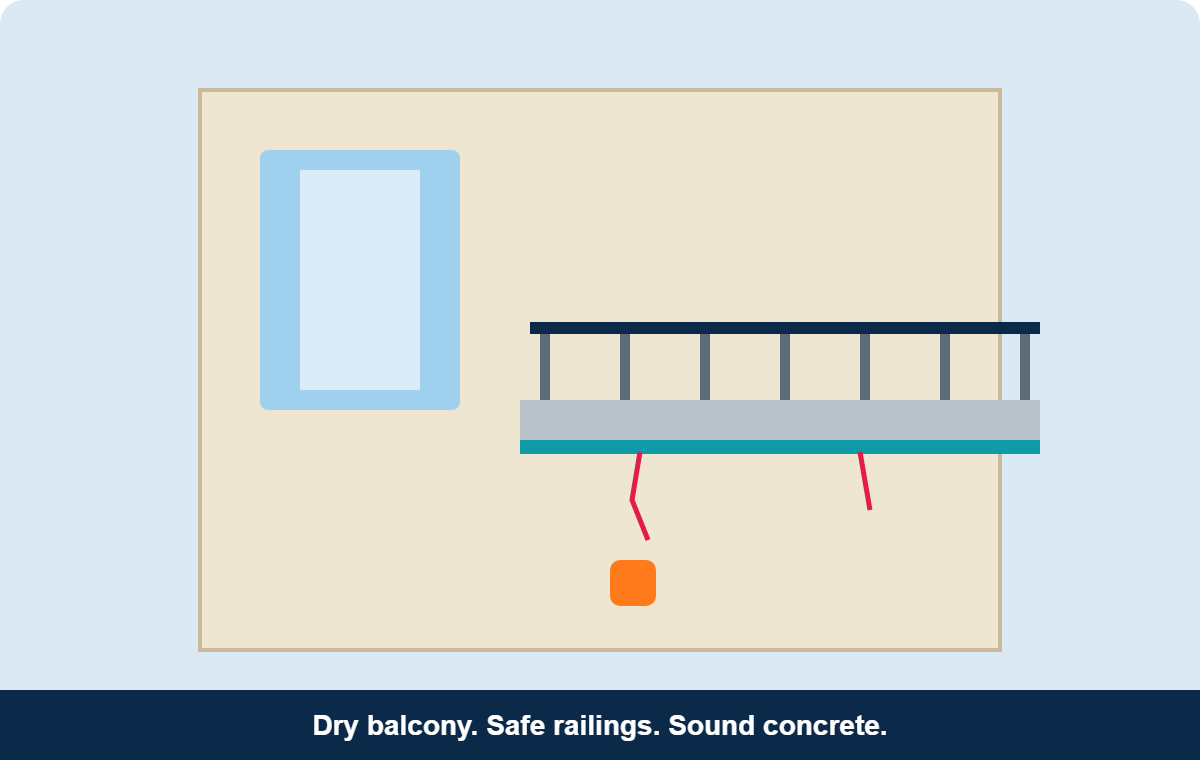
Balconies and Walkways at a Glance
~60 in.
of rain a Davie balcony takes in a typical year
Posts and joints
are the most common balcony leak points
Slab edge
drip details move water away from the building face
HOA rules
most condo balconies need association approval
Quick Answer: What Is Balcony Waterproofing in Davie, FL?
Balcony and walkway waterproofing protects exposed concrete decks, breezeways and stairs from rain, sun and foot traffic. It typically includes repairing cracks and spalls, sealing the wall-to-slab joint and railing posts, installing or restoring a drip edge and applying a traffic-grade coating with a slip-resistant finish. It helps stop leaks and stains on the ceilings below and protects the concrete and rebar. Call (754) 258-3576 or text photos for a written estimate from an independent local contractor.
Balconies are one part of protecting a multi-unit building. See our overview of condo and building waterproofing services in Davie.
Signs Your Balcony Needs Waterproofing
Check the surface, the edges and the underside.
Cracks and worn coating
Hairline cracks, chalky or peeling coating and faded patches let water into the slab.
Stains below the balcony
Water marks, peeling paint or efflorescence on the ceiling or wall below show water is passing through.
Rust stains and spalling
Rust streaks and flaking concrete suggest corroding steel inside the slab.
Loose or rusty railings
Post bases and anchors that move or corrode are a sign of water at the penetration.
How Water Damages a Balcony
A balcony is a slab that sticks out from the building and is exposed to rain on the top and often the underside. Water enters at cracks, the joint against the wall, railing posts and worn coatings. Inside the slab it reaches the steel reinforcement.
In Florida’s humid climate, steel that gets wet and salt-laden air corrodes quickly. Rust expands and cracks the concrete, called spalling, which lets in even more water.
Waterproofing interrupts the process. Sealing cracks and joints, flashing railings and coating the surface keep water out. Where steel is already corroding or concrete is breaking up, repair is needed before coating.

Balcony and Walkway Coating Systems Compared
Systems vary by exposure and by what the building allows.
| System | What it is | Best for | Watch out for |
|---|---|---|---|
| Traffic-grade polyurethane | Flexible liquid membrane with an aggregate topcoat | Most balconies and walkways | Needs careful prep and cure |
| Cementitious membrane | Cement-based layer with polymers | Rough or damaged concrete | Can crack if the slab flexes |
| Acrylic deck coating | Water-based decorative coating | Light-duty balconies | Needs more frequent maintenance |
| Epoxy broadcast system | Hard, chemical-resistant surface with aggregate | Covered walkways and garages | Can be slippery or UV-sensitive if not specified correctly |
| Sheet or tile systems | Waterproof layer under tile or pavers | Premium finishes | Joints and drains need care; harder to inspect |
| Penetrating sealer | Clear sealer that soaks into concrete | Surfaces in good condition | Does not bridge cracks |
Ask for the product data sheet, the number of coats and a physical sample of the finish.
Waterproofing by Area
Each part of the balcony needs its own detail.
The surface sees the most wear.
- Clean and repair cracks and damaged concrete
- Apply primer and the coating system in specified coats
- Finish with anti-slip aggregate
Check slope so water runs off the edge.
The joint where the balcony meets the wall is a classic leak point.
- Remove failed sealant and prepare the joint
- Install backer rod and flexible sealant
- Turn the coating up the wall as a cove or flash it
This should also be coordinated with the wall coating.
Posts penetrate the waterproofing.
- Remove corrosion and seal around each base
- Use proper flashing or sealant boots
- Coordinate any re-setting with a railing professional
Loose or damaged railings are a safety and code issue.
The edge directs water away.
- Repair spalls and rounded edges
- Install or restore a drip groove or metal edge
- Coat the edge so water does not run back under the slab
A missing drip lets water streak the wall and underside.
Common-area stairs and breezeways get heavy traffic.
- Repair treads, nosings and landings
- Apply a slip-resistant coating
- Mark edges and transitions for safety
Schedule phased work so residents can still get in and out.
How Balcony Waterproofing Works: Four Steps
A reliable job follows this order.
1
Inspect and document
Check the surface, joints, posts, edges and the underside, and photograph problem areas.
2
Repair the substrate
Remove loose concrete, treat steel where needed, patch spalls and fill cracks.
3
Seal details and coat
Seal the wall joint and railing posts, then apply primer, membrane and topcoat.
4
Cure and verify
Protect the surface while it cures, then inspect and provide photos and warranty terms.
Balcony Problems and Likely Causes
| What you see | What it usually means | Typical response |
|---|---|---|
| Hairline cracks | Shrinkage and temperature movement | Seal and coat |
| Cracks at the wall | Movement between slab and wall | Install flexible sealant and flash the joint |
| Rust stains and spalling | Corroding rebar | Evaluate and repair before coating |
| Stains on ceiling below | Water passing through the slab | Find the entry point and seal it |
| Peeling coating | Poor prep or aged coating | Strip and recoat |
| Loose railing | Corroded or loosened anchors | Have a railing professional evaluate |
| Ponding water | Poor slope or clogged drain | Correct slope or clear drains |
Repair, Recoat or Rebuild?
The right level of work depends on condition.
| Condition | Typical approach | Why |
|---|---|---|
| Sound surface, worn coating | Clean and recoat | Restores protection at lowest scope |
| Cracks and failed joints | Repair, seal and coat | Stops water at its source |
| Spalled concrete and rust | Structural repair first, then coating | Coating cannot stop corroding steel |
| Sagging or severely cracked slab | Engineer evaluation | Safety and structural concerns come first |
| Ongoing leaks below | Investigate all entry points | Surface coating alone may not be the cause |
If a slab looks unsafe, keep people off it and ask a licensed professional to evaluate it.
What Affects the Cost of Balcony Waterproofing
We do not quote prices by phone because each balcony differs.
| Factor | Why it matters | Effect on cost |
|---|---|---|
| Size and number of balconies | Larger areas and many units add time and material | Higher with size |
| Condition of concrete | Spalls, rust and cracks add repair scope | Higher |
| System selected | Membranes and finishes differ in cost | Varies |
| Railings and details | Many posts and corners add labor | Higher |
| Access and scaffolding | Upper floors need access equipment | Higher |
| Association requirements | Insurance, approvals and phasing add steps | Varies |
Mistakes That Cause Balcony Coatings to Fail
- Coating over rust and spalls. The steel keeps corroding and pops the coating off.
- Ignoring the wall joint and posts. Water gets in around the edges of the coating.
- Skipping drip edges. Water runs back under the slab and stains the wall.
- Using a slick finish. Wet shoes need real traction.
- Working in wet weather. Moisture in the slab ruins adhesion.
- Not getting association approval. It can lead to stop-work orders and rework.
- Choosing only on price. Thin coatings and missing details fail quickly.
Why Balconies Are Hard on Waterproofing in Davie
Local weather and building patterns make balconies and walkways a frequent source of leaks.
Heavy rain and sun
Summer downpours soak exposed slabs and strong sun heats and cools coatings every day, which causes cracking and fading.
Humid, salt-influenced air
Moist air speeds up corrosion of steel railings and the rebar inside slabs.
Many multi-unit buildings
Condos and apartments mean many balconies, shared rules and phased projects. Water from one balcony can show up in another unit. For wall details around the balcony, see our page on exterior wall waterproofing.
Windows and doors at the balcony
Sliding doors and windows open onto balconies and need sound sealant and flashing. Related work is covered on our window and door caulking page.
A Balcony Care Calendar for Davie
| When | What to do | Why it helps |
|---|---|---|
| Late winter to spring (Feb – Apr) | Inspect coatings, joints and railing bases, and plan repairs. | Work is done before the rainy season. |
| Rainy season (May – Oct) | Keep drains clear and watch for ponding and new stains. | Early notice keeps repairs small. |
| Before a named storm | Remove loose items from balconies and photograph their condition. | Reduces debris and documents condition. |
| After a major storm | Check for debris, new cracks and water entering below. | Quick action limits damage. |
| Drier months (Nov – Jan) | Schedule coatings and joint work. | Dry weather helps cure. |
Balcony Waterproofing for Different Property Types
| Property type | Common situation | What owners usually need |
|---|---|---|
| Condominiums | Many balconies and shared rules | Association approval, phased work and clear documentation |
| Townhomes | Balconies and rooftop terraces | Crack sealing, coating and railing details |
| Apartment complexes | Breezeways and stairs with heavy use | Durable, slip-resistant systems and resident notices |
| Single-family homes | Second-floor balconies over living space | Coating and flashing to protect interiors |
| Commercial buildings | Walkways and exterior corridors | Scheduled work that keeps access open |
What a Good Balcony Estimate Should Include
- Inspection findings: photos of cracks, rust, joints and the underside.
- Repair scope: spalls, cracks, rust treatment and any structural items.
- Detail work: wall joint, railing posts, drains and slab edges.
- The exact system: product names, coats, thickness and finish.
- Slip resistance: how the finish achieves traction.
- Access and protection: how adjacent units, windows and plants will be protected.
- Schedule: duration, weather plan and cure time.
- Approvals and insurance: what the association needs from the contractor.
- Warranty: what is covered, for how long and what voids it.
Caring for a Waterproofed Balcony
- Sweep and rinse the surface regularly and clean up spills quickly.
- Use furniture pads and avoid dragging heavy items.
- Keep drains and scuppers clear of leaves and debris.
- Avoid harsh acids and pressure washing unless the coating maker allows it.
- Re-check joints, railing bases and the underside each spring and after storms.
- Report new stains or cracks to the association or contractor promptly.
Questions to Ask Before You Approve Balcony Work
| Question | Why it matters | What a good answer sounds like |
|---|---|---|
| How will you handle rust and spalls? | Coatings cannot stop corroding steel | Concrete repair is part of the scope before coating |
| How are the wall joint and railing posts sealed? | These are common leak points | Specific flashing or sealant details are described |
| What system and thickness will you apply? | Thin coats wear quickly | Product, coats and thickness are listed in writing |
| How will you keep residents safe? | Balconies may be in use | A plan for barriers, notices and phasing |
| Do you carry insurance the association requires? | Associations often require proof | Certificates are provided on request |
| What does the warranty cover? | Terms vary widely | Written terms with exclusions listed |
Working With Condo Associations and Property Managers
Most balcony and walkway projects in multi-unit buildings involve an association. Planning early prevents delays.
Approvals and scope
Associations commonly decide who is responsible for slabs, coatings and railings. Get the scope, colors and products approved in writing before the contractor mobilizes.
Insurance and licensing
Boards often require certificates of insurance and proof of licensing. Ask each contractor to provide them up front, and keep copies with the project file.
Resident communication
Residents need notice of schedules, restricted access and cure times. Clear notices reduce complaints and keep furniture and plants out of the way.
Phasing the work
Large buildings are usually done in phases by stack, floor or elevation so that residents keep access. A good contractor will propose a phasing plan and show how drainage and temporary protection will be handled.
Balcony Waterproofing Timeline
Every project differs, but most follow this general pattern.
| Stage | What happens | General notes |
|---|---|---|
| Inspection and scope | Walk the balconies, document defects and discuss options | Photos and notes become the written scope |
| Approvals | Associations and managers review the scope, colors and insurance | Can take longer than the work itself |
| Preparation | Clean, repair concrete, treat steel and seal cracks and joints | Often the most important stage |
| Coating | Apply primer, membrane and slip-resistant topcoat | Weather and humidity affect timing |
| Cure and walkthrough | Keep traffic off, then inspect and review care and warranty documents | Follow the product maker’s cure times |
Safety Around Balconies and Walkways
Waterproofing is not the same as a structural or safety inspection, and a few warning signs should never be ignored.
Keep people off a balcony if it sags, moves underfoot, has large pieces of concrete falling off or has a railing that is loose. Contact the association or building owner and ask a licensed professional, such as a structural engineer, to evaluate it. Cosmetic coatings should never be used to hide a safety problem.
Slip resistance also matters. Ask for a wet sample of the finish, and request that edges, stairs and transitions are finished to provide good traction.
Drainage, Slope and Scuppers: The Overlooked Details
Even the best coating struggles if water cannot leave the surface. A balcony should slope slightly away from the building so rain runs off the edge or into a drain instead of standing against the wall.
Ponding
Puddles that remain a day after rain point to low spots or a blocked drain. Standing water speeds up coating wear and finds every tiny crack. Low areas can sometimes be corrected with leveling materials before the membrane goes on.
Drains and scuppers
Where a balcony has a drain or scupper, it should be cleaned, sealed to the membrane and checked for flow. Clogged openings send water back across the surface and toward the wall.
Gutters and downspouts above
Water from a roof or upper balcony that pours onto the one below can overwhelm it. Directing that water away is often as important as the coating itself.
Furniture, planters and mats
Rubber mats and planters trap moisture against the surface. Use feet or risers so that water can drain and the coating can dry.
Who Does the Work
Waterproofing Davie is a local referral service. We do not perform the work ourselves. Independent contractors do the work and provide their own written estimate, warranty terms, license and insurance details. Before you approve work, ask the contractor to confirm their Florida license and insurance in writing and verify both with the State of Florida. Balcony work often involves associations, engineers and railing contractors, so scope and permissions should be agreed in writing before work begins.
Frequently Asked Questions About Balcony and Walkway Waterproofing in Davie
Related Waterproofing Services
Get a Balcony Waterproofing Estimate in Davie
Tell us about the balcony or walkway, the stains or leaks you see and whether the property has an association. Photos of the surface, railing posts and underside help. You will get a plain-language explanation and a written estimate before any work starts.