
Home › Services › Waterproof Painting and Sealing
Waterproof Painting and Sealing in Davie, FL
Paint is the first line of defense for Davie walls, but ordinary paint wears out fast in strong sun and heavy rain. Waterproof painting combines proper prep, primer and flexible coatings so the finish looks good and keeps water out. Waterproof painting in Davie, FL adds the protection ordinary paint lacks.
Local referral to independent contractors · Written estimate before work starts · Emergency leaks welcome
Waterproof Painting at a Glance
~60 in.
of rain a Davie paint job must shed in a typical year
Prep first
most paint failures start with poor preparation
2 coats
a common minimum for flexible waterproofing paint
Dry window
surfaces must be dry and rain-free while paint cures
Quick Answer: What Is Waterproof Painting?
Waterproof painting is exterior painting done as a protection system and not only a color change. It starts with cleaning and repairs, uses a primer or sealer matched to the surface, and applies flexible, water-shedding coatings in the right thickness. The result protects stucco, block and concrete from rain, reduces chalking and cracking, and keeps the look fresh longer. Call (754) 258-3576 or text photos for a written estimate from an independent local contractor.
Painting is one piece of keeping a building dry. For roofs, walls, windows and slabs together, see the waterproofing and painting services Davie owners ask for.
Signs Your Paint Is No Longer Protecting the Wall
Run your hand over the wall and look closely on a dry day.
Chalking
A white powder that rubs off means the binder in the paint has broken down in the sun.
Peeling and flaking
Paint lifting in sheets or flakes has lost adhesion, often because of moisture behind it.
Fading and cracking
Color loss and fine cracks across the paint film show the coating has lost flexibility.
Stains and growth
Dark streaks, green growth and rust-colored stains suggest the wall is staying damp.
Why Paint Fails in Florida
Paint is a thin film that has to survive daily heat, strong ultraviolet light, months of rain and humidity that rarely drops. It also has to move with a wall that expands and contracts. When any of those conditions beats the film, it chalks, cracks or peels, and the wall behind starts absorbing water.
Most failures are not product failures. They are preparation failures: paint applied over dirt, chalk, mildew, loose paint, damp surfaces or open cracks. Even the best coating cannot bond to a surface that is not ready.
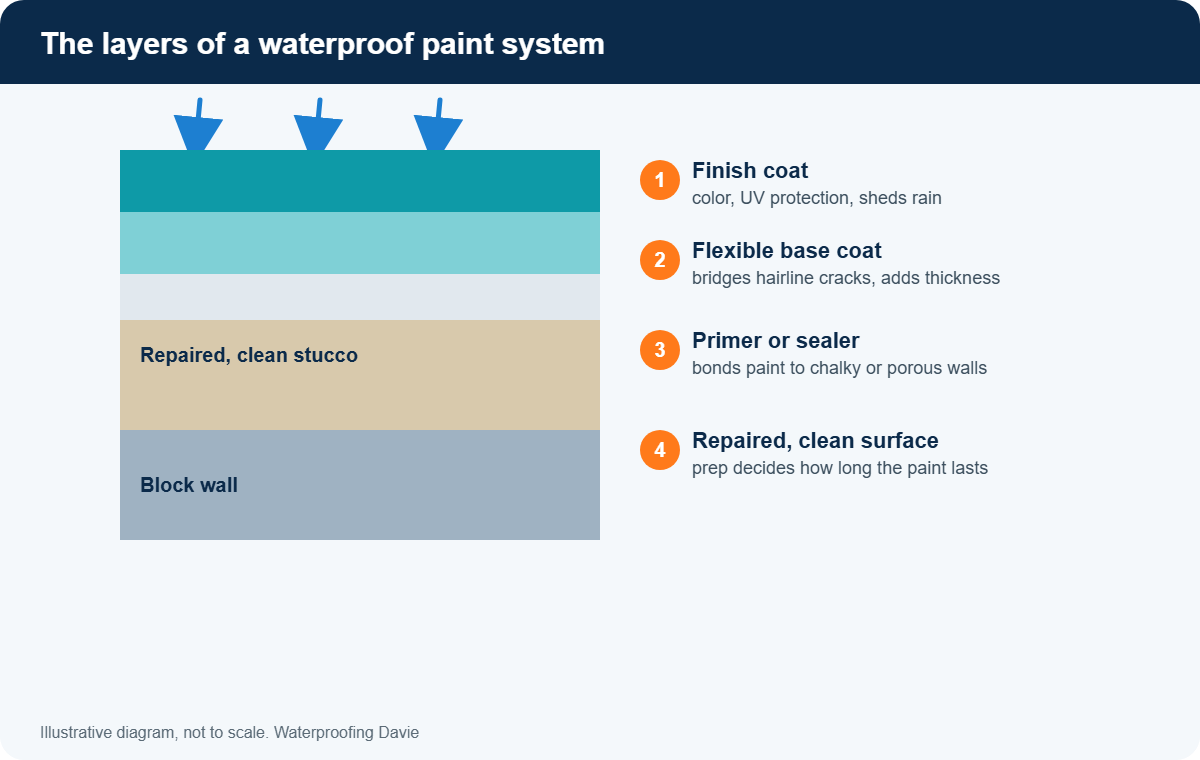
A waterproof painting system fixes that by treating the whole process: clean, repair, prime, apply the coats at the right thickness and respect the cure time.
Waterproof Paint vs. Regular Exterior Paint
This table shows the general differences. Product names and performance vary by brand.
| Regular exterior paint | Waterproofing or elastomeric paint | |
|---|---|---|
| Film thickness | Thin film | Much thicker film when applied correctly |
| Flexibility | Limited, cracks with the wall | High, can bridge hairline cracks |
| Water resistance | Sheds light rain, absorbs over time | Designed to shed liquid water |
| Breathability | Usually good | Should allow vapor out, check the data sheet |
| Best on | Sound walls with low exposure | Stucco, block and concrete exposed to rain |
| Needs | Clean surface and primer | Clean, repaired surface, primer and correct coverage |
| Cost and effort | Lower | Higher, with more prep and material |
Ask the contractor to explain why the proposed product fits your wall and to show its data sheet.
Waterproof Painting by Surface
The best prep and products depend on what you are painting.
The most common surfaces in Davie.
- Pressure wash gently and let the wall dry fully
- Repair cracks and loose stucco, and treat mildew
- Prime chalky areas, then apply two coats of flexible coating
Matching texture on repairs keeps the wall uniform.
Concrete and masonry absorb water and can have efflorescence.
- Remove salts and growth, and let the surface dry
- Fill voids and seal joints
- Use a masonry primer and a breathable coating
Bare masonry may suit a clear sealer instead of paint.
Details take a beating from sun and rain.
- Scrape, sand and spot-prime bare wood and metal
- Treat rust and use a rust-inhibiting primer
- Caulk joints and finish with a durable exterior paint
Wood rot should be repaired before painting.
Horizontal surfaces collect water and wear faster.
- Clean, repair cracks and etch or prime if needed
- Apply a coating designed for foot traffic and water
- Add an anti-slip finish where it is wet
See our page on pool deck waterproofing for details.
How Waterproof Painting Works: Four Steps
A thorough job follows this order.
1
Inspect and test
Check cracks, chalking, growth, moisture and old paint adhesion, and agree on colors and approvals.
2
Clean and repair
Wash, scrape, treat growth, fill cracks, caulk joints and let everything dry.
3
Prime and coat
Prime where needed, then apply the coating in the specified number of coats at the right thickness.
4
Cure and walk through
Allow the coats to cure, inspect for missed spots and provide photos, color formulas and warranty terms.
Preparation: The Part That Decides How Long Paint Lasts
Good prep takes more time than painting, and it is where cheap jobs cut corners. A thorough contractor covers these steps.
- Washing: removing dirt, chalk, mildew and algae at a pressure suited to the surface, then letting it dry.
- Scraping and sanding: taking off loose and peeling paint back to a sound edge.
- Crack and hole repair: filling with a patch matched to the surface and the size of the crack.
- Caulking: sealing joints around openings, trim and penetrations with a paintable sealant.
- Treating growth and rust: using the right cleaners and primers.
- Priming: using a primer or sealer suited to chalky stucco, bare masonry or metal.
- Masking and protection: protecting windows, plants, vehicles and walkways.
Choosing Sheen and Finish
| Sheen | Look | Good for | Keep in mind |
|---|---|---|---|
| Flat or matte | No shine, hides surface flaws | Stucco and large wall areas | Shows dirt more easily on some products |
| Low sheen or satin | Soft glow | Walls and trim in humid areas | Easier to wash than flat |
| Semi-gloss | Noticeable shine | Trim, doors and fascia | Shows surface flaws more |
| Textured or heavy-bodied | Coarse, filled finish | Rough block and masonry | Needs more material and the right roller |
Weather and Timing for Painting in Davie
Paint is applied wet and cures in the air, so weather matters more than most people expect.
| Condition | Why it matters | What contractors do |
|---|---|---|
| Rain or storms | Rain can wash off or spoil fresh coats | Watch forecasts and stop when storms threaten |
| Morning dew and humidity | Damp surfaces prevent bonding and slow drying | Start after surfaces are dry and stop before evening dew |
| Heat and direct sun | Paint can dry too fast and not bond or level properly | Work in shade where possible and follow product limits |
| Wind and dust | Debris sticks to wet paint | Plan around gusty days and clean surfaces first |
| Manufacturer limits | Each product lists temperature, humidity and dry-time limits | Follow the data sheet, not the calendar |
What Affects the Cost of Waterproof Painting
We do not quote prices by phone because every building differs. These are the main factors.
| Factor | Why it matters | Effect on cost |
|---|---|---|
| Area and height | More wall and taller buildings need more material and access equipment | Higher with size |
| Condition and repairs | Cracks, peeling and stucco damage add prep time | Higher |
| Product and coats | Premium products and extra coats cost more | Varies |
| Colors and trim | Several colors and detailed trim add labor | Higher |
| Access and protection | Landscaping, pools and vehicles need protecting | Higher |
| Warranty requirements | Longer warranties often need specified thickness and prep | Varies |
Painting Mistakes That Shorten the Life of a Coating
- Painting over a dirty or chalky wall. The paint will not bond.
- Painting over damp surfaces. Moisture causes blisters and peeling.
- Skipping primer on porous or chalky areas. The first coat soaks in and fails early.
- Thin application. Waterproof coatings only work at the specified thickness.
- Ignoring cracks and joints. Water goes straight past the paint.
- Painting in poor weather. Rain, dew and heat ruin coats that look fine at first.
- Choosing only on price. A low estimate that skips prep costs more later.
Why Painting Matters More in Davie
Several local conditions put paint under extra strain.
Sun and ultraviolet light
South Florida sun breaks down binders and fades colors, especially dark ones on south and west walls.
Rain and humidity
Months of damp weather encourage mildew and keep walls wet, which attacks paint from behind.
Storm season
Wind-driven rain tests every crack and joint, and a sound coating helps keep water out.
HOA rules and color approvals
Most communities regulate colors and finishes. Share the approved palette with the contractor, and get approvals in writing. For repairs that go beyond paint, see our guide to exterior wall waterproofing.
A Painting Calendar for Davie Owners
| When | What to do | Why it helps |
|---|---|---|
| Late winter to early spring (Feb – Apr) | Inspect paint, plan colors and approvals, and book work. | You paint before the rainy season and can still schedule easily. |
| Rainy season (May – Oct) | Watch for new stains and peeling, and keep sprinklers off the walls. | Early notice keeps repairs small. |
| Before a named storm | Photograph the condition of the walls and trim. | Documents condition for insurance. |
| After a major storm | Check for new cracks, peeling and damp interior walls. | Quick repair stops water entering. |
| Drier months (Nov – Jan) | Schedule washing, repairs and painting. | Dry weather gives the best cure. |
What a Good Painting Estimate Should Include
- Inspection notes: photos and a list of repairs needed.
- Surface prep: washing, scraping, caulking and priming steps.
- Products: primer, paint, sealer and caulk by name, with data sheets.
- Coats and coverage: number of coats and coverage rate or thickness.
- Colors and sheen: samples or a test patch, and HOA approval status.
- Protection and cleanup: how plants, windows and vehicles are covered.
- Schedule and weather plan: expected duration and rain policy.
- Warranty: what is covered, for how long and what voids it.
Caring for a Fresh Coating
- Keep sprinklers off the walls so the paint stays dry.
- Wash walls gently once a year, as the manufacturer recommends, without harsh pressure.
- Check for cracks and peeling each spring and after storms, and touch up early.
- Keep leftover paint, color formulas and warranty paperwork together.
- Trim plants away from walls so air can dry them after rain.
Waterproofing Paint, Clear Sealers and Penetrating Repellents: What Is the Difference?
Three product families are often mixed up. Film-forming coatings, such as elastomeric and waterproofing paints, sit on the surface as a thick, flexible layer. They change the color, can bridge fine cracks and are the usual choice for stucco and painted block.
Penetrating repellents, such as silane and siloxane products, soak into the surface and line the pores so water beads off. They are nearly invisible and suit bare masonry, but they do not bridge cracks and are not meant to be painted over in most cases.
Clear film-forming sealers form a thin protective layer, often for decks, patios and pavers. They can darken the surface and wear with foot traffic. The right choice depends on the surface, the look you want and how much movement the wall has. A good contractor explains why one product suits your building better than another.
Ten Questions to Ask Before You Hire a Painting Contractor
| Question | What a good answer sounds like |
|---|---|
| What prep will you do on each wall? | Washing, scraping, crack repair, caulking and priming, with details |
| Which products and how many coats? | Product names, data sheets and coverage rates |
| How do you handle chalky or porous areas? | A primer or sealer matched to the surface |
| How do you deal with mildew and growth? | Treatment before painting, not paint over it |
| What are your weather rules? | Dry surfaces, forecast checks and stop rules for rain and dew |
| How will you protect landscaping and windows? | A protection plan, in writing |
| Will I get color samples or a test patch? | Yes, on the actual wall, with HOA approval |
| Who is on site, and what is the schedule? | A named contact and expected duration |
| What does the warranty cover? | Written terms, including what voids it |
| Can I see license, insurance and references? | Prompt answers you can verify with the State of Florida |
Waterproof Painting for Different Property Types
| Property type | Common situation | What owners usually need |
|---|---|---|
| Single-family homes | Faded, chalky stucco and peeling trim | Full wash, crack repair, primer and two coats |
| Townhomes and HOA communities | Uniform palette and shared walls | Approved colors, phased work and board documentation |
| Condos and multi-story buildings | Tall walls and many balconies | Access planning, joint sealing and records for the association |
| Commercial and retail | Large façades and signage | Fast scheduling, durable coatings and low disruption |
| Rental properties | Turnover and tenant complaints | Quick, durable finishes and written scope for owners |
Color Choice, Heat and Fading
Color is not just style. Lighter colors reflect more sunlight, which keeps the wall surface cooler and reduces stress on the coating. Dark colors absorb more heat, fade faster in strong sun and show cracks and dirt more. If you love a deep color, ask about products formulated for high-heat, high-UV exposure, and expect to recoat sooner on south and west walls.
Always test color on the actual wall. Texture, light and the colors around the building change how a color looks, and a small sample on site beats a paper swatch. In HOA communities, get written approval of both color and sheen before work begins.
Who Does the Work
Waterproofing Davie is a local referral service. We do not perform the work ourselves. Independent contractors do the work and provide their own written estimate, warranty terms, license and insurance details. Before you approve work, ask the contractor to confirm their Florida license and insurance in writing and verify both with the State of Florida. Painting crews should tell you which products they use, how many coats they apply and how they prepare each surface.
Frequently Asked Questions About Waterproof Painting in Davie
Related Waterproofing Services
Get a Waterproof Painting Estimate in Davie
Tell us what you want to paint, the condition of the surface and any HOA color rules. Photos help. You will get a plain-language explanation and a written estimate before any work starts.