
Home › Services › Emergency Leak Repair
Emergency Leak Repair in Davie, FL
Water coming in right now? Protect people and belongings first, then call. We connect Davie property owners with independent local contractors for fast leak response, temporary protection and a plan for the permanent fix.
Call or text any time with the details · Photos help · Written estimate before permanent work
Emergency Leaks at a Glance
24–48 hrs
how soon mold can begin on damp materials
Jun 1 – Nov 30
hurricane season, when leaks and storm damage peak
~60 in.
of rain in a typical Broward County year
5 steps
safe, contain, document, call, temporary repair
Quick Answer: What Should I Do If My Roof or Wall Is Leaking Right Now?
First, keep people away from the wet area and avoid standing water near outlets or fixtures. Turn off power to the affected area only if you can reach the panel safely. Move belongings, place buckets and plastic sheeting, and take dated photos and video. Do not climb onto a wet roof. Then call (754) 258-3576 or text photos and we will connect you with an independent local contractor who can stop the water and protect the property while you plan the permanent repair.
For roofs, walls, windows, slabs and drainage, our Waterproofing Davie referral service connects you with the right contractor for the source of the water.
What Counts as an Emergency?
Not every leak needs a midnight call, but these do.
Water pouring in
Active water through a ceiling, wall, window or door, especially during a storm.
Bulging or sagging ceilings
A ceiling holding water can collapse. Keep people away and release water in a controlled way if it is safe.
Water near electricity
Water around lights, outlets, panels or appliances is a shock and fire hazard.
Storm damage
Missing roofing, exposed deck, broken windows or fallen trees that open the building to rain.
Your First Hour With an Active Leak
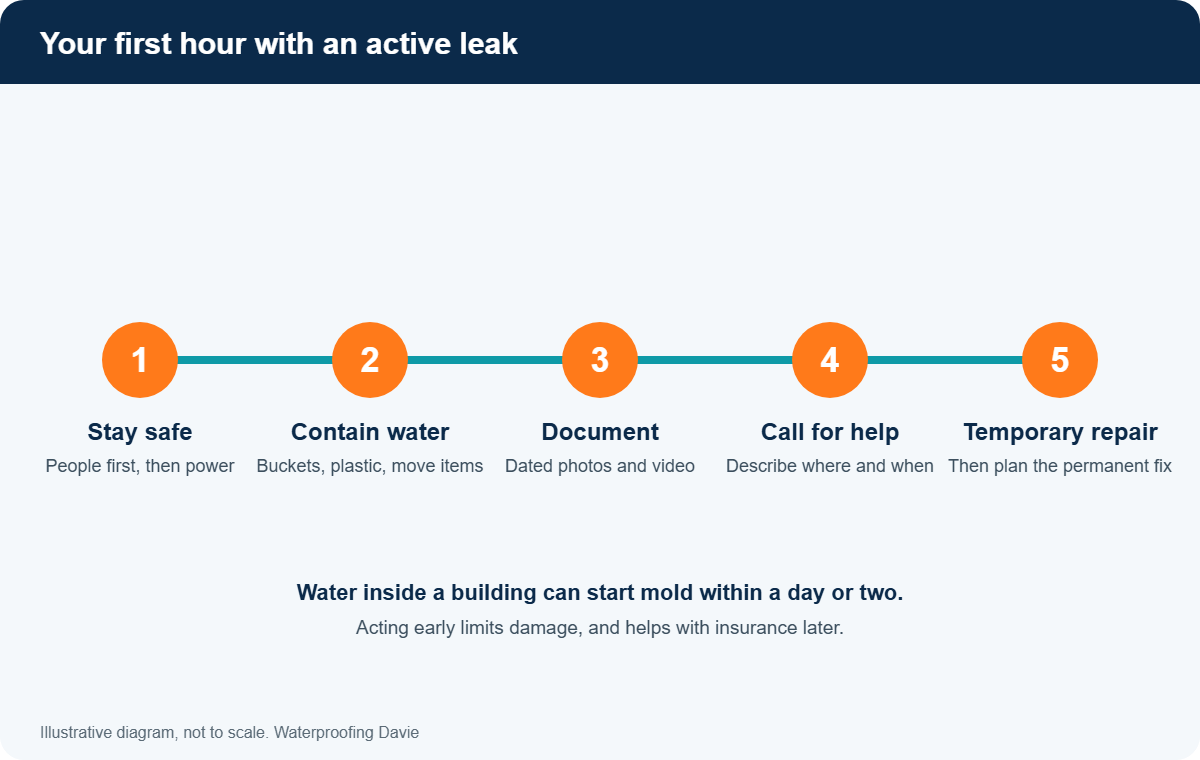
The first hour matters more than the rest of the week. Work through these steps in order, and stop if anything feels unsafe.
- Stay safe. Keep everyone away from wet ceilings and electrical fixtures. Turn off power to wet areas only if the breaker panel is dry and easy to reach.
- Contain the water. Place buckets, move furniture and electronics, and cover items with plastic sheeting.
- Document. Take photos and short videos of the damage, the source if visible and the date and time.
- Call for help. Give the address, where the water is coming in and when it started.
- Ask about temporary protection. A tarp or sealant patch can stop water while you plan the permanent repair.
Where the Water Is Coming From: Emergency Triage
Where the water enters decides who to call and what to do first. Use this table when you describe the problem.
| What you see | Likely source | First action | Who to call |
|---|---|---|---|
| Dripping or staining during rain, mostly upstairs | Roof, flashing or a window above | Contain water, document and call for temporary roof protection | Roof contractor through us |
| Water at the corner or sill of a window or slider | Failed sealant or blocked drains | Wipe and contain water, and photograph | Waterproofing or window contractor through us |
| Dampness and streaks on a wall after storms | Cracked stucco or wall opening | Contain and document, then arrange inspection | Stucco or waterproofing contractor through us |
| Water seeping through a floor or wall base | Slab moisture, drainage or flooding | Move belongings, remove wet material and document | Waterproofing contractor, and water extraction if flooding |
| Water on dry days from one spot | Plumbing or air conditioning leak | Shut off the water or unit | Plumber or HVAC technician |
| Sparks, buzzing or a burning smell | Water in electrical systems | Leave the area, call emergency services | Electrician |
If you are not sure, call us. We help sort out the source and connect you with the right contractor.
Emergency Help by Situation
Choose the situation closest to yours.
The goal is to stop water entering the building until the weather clears.
- Contain water inside and protect belongings
- Avoid the roof, which is slippery and dangerous
- A contractor can install a temporary cover and patch obvious openings
Permanent repair follows once the roof is dry and a full inspection is done. See our page on roof leak repair in Davie.
Wind-driven rain often pushes water through joints around openings.
- Mop and contain water, and move rugs and electronics
- Clear weep holes and track drains if you can do so safely
- Document the leak location and conditions
Temporary sealing is possible, but permanent repair needs dry joints. See our guide to window and door caulking.
Water coming through walls or floors can come from heavy rain, drainage or flooding.
- Move belongings and remove wet rugs and furniture
- Use fans and dehumidifiers if available and safe
- Photograph high-water marks and damaged items
If water is deep or spreading, contact a water extraction service as well.
Businesses and associations face extra stakes, including tenants and downtime.
- Notify the property manager or board right away
- Protect inventory, equipment and records
- Document damage for each unit and common area
A contractor can combine temporary protection with a plan for repair across units.
Temporary Repair vs. Permanent Repair
Emergency work is meant to hold, not to last. Knowing the difference helps you plan.
| Temporary repair | Permanent repair | |
|---|---|---|
| Goal | Stop water entry quickly and limit damage | Fix the cause and restore the system |
| Examples | Tarp, sealant patch, board-up, water extraction | Replacing flashing, tiles or sealant, re-coating, wall repair |
| Duration | Days to a few weeks | Designed to last for years, with a warranty |
| When | During or right after the event | When it is dry and safe, after a full inspection |
| Cost to compare | Usually smaller and quick | Based on scope, materials and access |
| What to ask | How long will it hold, and what are the limits? | What exactly is included, and what is the warranty? |
Ask the contractor to write down what the temporary measure does and does not do, and keep the paperwork for your insurer.
What to Tell Us When You Call
Having these details ready helps us match you with the right contractor faster.
- The property address, and whether it is a house, condo, townhome or commercial building
- Where the water is coming in, and which floor
- When it started, and whether it only happens in rain or wind
- What is wet or damaged, and whether anything electrical is involved
- The roof or wall type, if you know it
- Whether there is a bulging ceiling or standing water
- Your HOA or property manager contact if the building is shared
- Photos or video, which you can text to (754) 258-3576
What Not to Do During a Leak Emergency
- Do not climb onto a wet roof. Falls cause serious injuries after storms.
- Do not stand in water near outlets or appliances. Turn off power only if you can do so safely.
- Do not ignore a bulging ceiling. A water-filled ceiling can collapse without warning.
- Do not clean up before photographing. Photos and video support insurance claims.
- Do not sign a large contract on the spot. Be cautious of door-to-door offers after storms, and verify licenses.
- Do not leave wet materials in place. Wet insulation, carpet and drywall breed mold and should be removed or dried quickly.
Mold, Drying and Cleanup
After the water stops, drying becomes the priority. Remove standing water first, then run fans and dehumidifiers and open windows when the air outside is drier than inside. Wet carpet, padding, insulation and soft drywall often need to be removed, because they hold moisture and breed mold. Hard surfaces can usually be cleaned and dried.
Extensive mold, health concerns or damp materials that cannot be dried should be handled by a licensed mold or water damage professional. Fix the source of the water first, because drying and cleaning will not last if the leak remains.
Insurance and Documentation After a Leak
Insurance is its own process, but good records help. Most policies expect you to take reasonable steps to limit further damage and to report the loss promptly.
- Take dated photos and videos of damage before cleanup, including wide shots and close-ups.
- Keep receipts for emergency measures such as tarps, drying equipment and temporary housing.
- Call your insurer early, ask what they require and note the claim number.
- Keep damaged items until the adjuster has seen them, if possible.
- Get written estimates from contractors that describe the cause, scope and materials.
- Keep copies of every document and message, and write down dates and names.
Coverage depends on your policy, the cause and the date of loss, so ask your insurer or agent directly. We are not insurance advisors.
What Affects the Cost of Emergency Leak Repair
Emergency work varies widely, so we do not quote prices by phone. These are the main factors.
| Factor | Why it matters | Effect on cost |
|---|---|---|
| Source and size of the leak | A small opening is quicker to protect than a large storm-damaged area | Varies |
| Access and height | High, steep or complicated roofs need more equipment and care | Higher |
| Time and weather | After-hours work, storms and high demand can affect availability and rates | Can be higher |
| Materials | Tarps, patches and board-up materials differ by job | Varies |
| Hidden damage | Wet insulation and drywall add removal and drying | Higher |
| Follow-up repair | Permanent repair is separate from emergency protection | Adds a second stage |
Get Ready Before the Next Storm
Preparation makes a leak emergency far easier to handle.
| When | What to do | Why it helps |
|---|---|---|
| Late winter to early spring (Feb – Apr) | Have the roof, windows and walls inspected, and repair known weak spots. | Problems are fixed before the busiest season. |
| Before hurricane season (by June 1) | Build a kit with tarps or plastic sheeting, buckets, towels, a flashlight, a phone charger and the number (754) 258-3576. | You can contain leaks quickly, even if power is out. |
| Before a named storm | Photograph the roof, ceilings and openings, and move valuables away from vulnerable areas. | Documents the condition and reduces loss. |
| After a major storm | Check ceilings, windows and walls and call quickly if anything is wet. | Fast action limits damage and mold. |
| Drier months (Nov – Jan) | Schedule permanent repairs and upgrades. | Dry weather gives the best results. |
Why Leak Emergencies Are Common in Davie
Davie’s climate creates emergencies several times a year. These conditions explain why preparation matters.
Intense summer storms
Daily thunderstorms in the rainy season can overwhelm roofs and drains, and wind-driven rain forces water through small gaps.
Hurricane season
From June 1 to November 30, tropical storms can strip roofing, break windows and drive water through walls. Demand for contractors spikes afterward, so early calls matter.
Aging roofs and sealants
Heat and sun degrade roofing and sealants, so a leak often appears for the first time in a storm.
Mixed building types
Davie includes single-family homes, condos, rural properties and commercial buildings, each with different weak points and different people to notify.
Power outages
Outages during storms mean no lights and no sump or dehumidifier. A simple kit helps you act in the dark. For longer-term protection of the whole property, see the Davie service area page.
Emergency Leak Response for Different Property Types
| Property type | Special concerns | What helps most |
|---|---|---|
| Single-family homes | Roof and window leaks in storms, with the owner handling insurance and contractors | Fast containment, dated photos and one point of contact for the contractor |
| Condos and townhomes | Shared roofs and walls, with board and management involvement | Tell the property manager immediately, and document each unit that is affected |
| Landlords and rental properties | Tenants, access and duty to repair | Written updates to tenants, clear scope and records for insurers |
| Commercial and retail | Inventory, downtime and customers | Protect stock and equipment, notify the landlord and plan repairs outside opening hours |
| Rural and equestrian properties | Metal roofs, barns and outbuildings, with animals to protect | Move animals and feed first, then cover and contain leaks |
Build a Simple Leak Emergency Kit
A kit kept in one place saves minutes when water is coming in. It does not need to be expensive.
- Heavy plastic sheeting and painter’s tape or clips to cover furniture and floors
- Several buckets, a mop, towels and a wet-dry vacuum if you have one
- A flashlight, spare batteries and a phone charger or power bank
- Contractor and insurer phone numbers, and (754) 258-3576 saved in your phone
- A folder or phone album with your insurance policy, photos of the roof and ceilings and your HOA contact
- Work gloves, boots and a basic first-aid kit
- A screwdriver and a bucket kept together, in case you need to drain a bulging ceiling
Store the kit above floor level and away from where leaks are likely, so it stays dry when you need it.
After the Emergency: Planning the Permanent Repair
Once the water is contained, the real work begins. Use these steps to move from emergency to a lasting fix.
- Get the cause identified. Ask the contractor to explain where the water entered and why, with photos.
- Dry and clean. Remove wet materials, dry the structure and check for mold before closing up walls or ceilings.
- Compare written estimates. For anything beyond a small fix, get at least two itemized estimates that name materials, scope and warranty.
- Check licensing and permits. Verify the contractor’s license and insurance, and ask who handles permits.
- Schedule for good weather. Permanent sealants and coatings need dry conditions.
- Coordinate with your insurer. Share estimates and photos, and ask what they require before and after repairs.
- Keep records. File estimates, invoices, warranties and photos together for future reference.
If the leak came from the roof, see our guide to roof waterproofing in Davie for ways to protect against the next storm.
Who Does the Work
Waterproofing Davie is a local referral service. We do not perform the work ourselves. Independent contractors do the work and provide their own written estimate, warranty terms, license and insurance details. In an emergency it is tempting to skip checks, but ask the contractor to confirm their Florida license and insurance in writing and verify both with the State of Florida before you approve permanent work. Be cautious about large upfront payments, and get the scope in writing.
Frequently Asked Questions About Emergency Leak Repair in Davie
Related Waterproofing Services
Foundation and slab waterproofing
Deal with water coming through floors and wall bases.
Water Coming In? Call Now
Tell us where the water is entering, when it started and whether anything electrical is involved. Photos help. We will connect you with an independent local contractor as quickly as we can.